
Dermatologist’s choice on 11 ingredients for hyperpigmentation
What are the best ingredients you can use to treat hyperpigmentation? Dr. Chacon talks about the most popular ingredients widely used by dermatologists.

Table of Content:
What is hyperpigmentation? | What is the best treatment? | How to get a prescription? | Explore the treatments available via Miiskin | Sunscreen | Hydroquinone | Tretinoin | Tazarotene | Glycolic acid | Azelaic acid | Niacinamide | Tranxanemic acid | Thiamidol | Kojic acid | Vitamin C
In this article, Dr. Anna Chacon, board-certified dermatologist talks about the 11 best ingredients widely used by dermatologists for their remarkable efficacy in addressing the treatment of hyperpigmentation.
Hyperpigmentation, which often arises due to several factors such as sun exposure, acne scars, or aging, is a common challenge for many individuals.
By learning more about the unique benefits of these 11 exceptional ingredients, you will gain valuable insights on how they can help you achieve a brighter, more even complexion.
Whether you are dealing with stubborn age spots, melasma, or post-inflammatory hyperpigmentation, this article equips you with the knowledge to make informed choices so you and your online dermatologist can choose the best treatment for hyperpigmentation.
What is hyperpigmentation?
Dr. Chacon says that hyperpigmentation is a very common condition that results in the darkening of specific skin areas due to an excess of melanin causing dark spots or patches on the skin that range from brown, black, gray, to red or pink1.
Freckles, sun spots, age spots, acne scars, and melasma are different types of hyperpigmentation, and while these dark spots are harmless, they can impact a person’s self-esteem.
Fortunately, a combination of lifestyle adjustments and treatments can prove effective in managing hyperpigmentation.
What is the overall best treatment for hyperpigmentation?
Dr. Chacon says that overall, the most effective overall treatment for stubborn hyperpigmentation is often combination approach rather than a single over-the-counter cream. While hydroquinone is considered the gold standard for lightening dark spots, its results are significantly enhanced when combined with other proven ingredients like tretinoin, which speeds up cell turnover, and a mild corticosteroid, which reduces inflammation and irritation. This “triple combination” approach targets pigmentation from multiple angles, works faster than hydroquinone alone.
How to get a prescription for hyperpigmentation?
You can get a prescription for hyperpigmentation through Miiskin by starting an online consultation with a board-certified dermatologist. Simply upload photos of your skin and provide details about your concerns. The dermatologist will review your case and will issue a prescription, if safe and adequate for you. If you want a branded medication like Tri-Luma, let your dermatologist know. If you prefer a customized formula tailored to your skin’s needs, choose Foothills as your preferred pharmacy and order your treatment right on Miiskin.
Most Foothills formulas are $58.99, with a few advanced options being priced at $68.99.
Are hyperpigmentation and melasma the same?
Dr. Chacon says that melasma and hyperpigmentation are not the same thing. Melasma is a type of hyperpigmentation caused by sun exposure and hormonal changes.

Best ingredients to get rid of dark spots
1. Sunscreen
Sunscreen is absolutely essential in the management of melasma, as sun exposure can both initiate and exacerbate this skin condition. Sunscreen plays a dual role by preventing melasma from recurring and shielding the skin during treatment, when it becomes more susceptible to UV damage. The consistent use of sunscreen is pivotal for maintaining skin health, warding off further pigmentation issues, and preserving the positive outcomes of melasma cream treatment. It is advisable to opt for a broad-spectrum sunscreen with SPF 50
2. Hydroquinone
Hydroquinone is a skin-lightening agent widely used to treat hyperpigmentation, including melasma, dark spots, and age spots. It works by reducing melanin production in the skin, which helps fade discoloration and promote a more even complexion. Considered the gold standard for pigmentation treatment, hydroquinone is most effective when prescribed at 4% strength and used under the guidance of a dermatologist. When hydroquinone, tretinoin, and a mild corticosteroid are combined in one formula, they create the most powerful and effective treatment for skin lightening.
3. Tretinoin
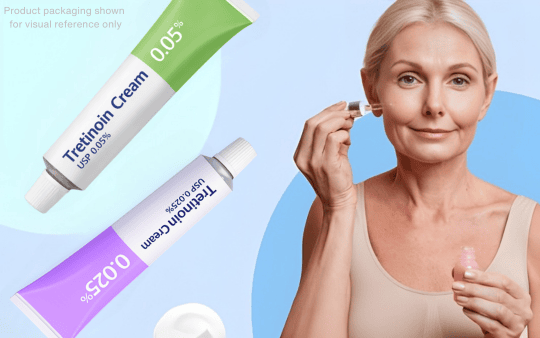
Tretinoin, a prescription retinoid, proves effective in tackling issues tied to skin pigmentation irregularities, such as melasma and post-inflammatory hyperpigmentation. It excels in diminishing dark spots and achieving a smoother, even skin tone2. Furthermore, tretinoin contributes to minimizing the visibility of both dark spots and acne scars.
4. Tazarotene
New clinical studies revealed that tazarotene lotion is effective for improving hyperpigmentation in black patients with moderate-to-severe acne. The study demonstrated that tazarotene treatment led to a significant reduction in hyperpigmentation rates. This data suggests that tazarotene can be an effective option for addressing hyperpigmentation in individuals with certain skin conditions, such as acne, particularly in black patients3.
5. Glycolic acid
Glycolic acid is a potent choice for addressing melasma, thanks to its exfoliating properties, which effectively sloughs off dead skin cells and progressively diminishes the appearance of dark patches. Furthermore, it stimulates collagen production, elevating skin texture and enhancing overall aesthetics4. Additionally, glycolic acid can be combined with other skin-lightening treatments, fostering a more uniform skin tone.
6. Azelaic acid
Azelaic acid is a topical medication that can be bought with a prescription or over-the-counter. Azelaic acid has antibacterial, anti-inflammatory, exfoliating properties, and a skin lightening effect5. You need a prescription to buy azelaic acid 15% and 20%, but creams with lower concentrations than 10% can be bought over-the-counter.
7. Niacinamide
Niacinamide is another ingredient widely used as part of a combination therapy for hyperpigmentation due to its skin-brightening and anti-inflammatory properties which lead to a lighter and more even skin tone6. Niacinamide is well-tolerated and it promotes skin hydration and barrier function, making it suitable for various skin types.
8. Tranexamic acid
Tranexamic acid can be used orally7 or topically, as part of a comprehensive treatment plan for melasma. This ingredient helps reduce excessive pigmentation by inhibiting the activation of melanocytes, the cells responsible for producing melanin and it also has anti-inflammatory and anti-angiogenic properties8.
9. Thiamidol
Recent studies show that thiamidol is effective for treating facial hyperpigmentation causing significant improvements. Generally, thiamidol is well-tolerated by users and can be easily integrated into daily skincare routines9.
10. Kojic acid
Kojic acid has skin-lightening properties that can help reduce the appearance of dark patches associated with melasma. It inhibits the production of melanin, the pigment responsible for skin color10. However, in order to be more effective, research shows that kojic acid should be used in combination with hydroquinone or glycolic acid11.
11. Vitamin C
Vitamin C protects the skin from UV radiation, which is a known exacerbating factor for melasma which is why it is used for melasma in addition to its strong antioxidant and skin-brightening properties. Vitamin C also shows better results in addition to other skin-lightening ingredients12.
All About Tretinoin
Do chemical peels also work for hyperpigmentation?
Yes, you can also use chemical peels for hyperpigmentation in addition to topical medication. However chemical peels are rather costly. Dr. Chacon recommends trying a triple combination cream and if after 3 months you still have dark spots, you can try alternative in-clinic procedures.
Read more articles reviewed by dermatologists
All you need to know about tretinoin
All you need to know about tazarotene
What is the best cream for melasma
Can you get hydroquinone over the counter?
Uses and benefits of hydroquinone cream
Hydroquinone and tretinoin for melasma

The 12 most used acne treatments
Discover the top 12 topical acne treatments to help you and your doctor in making the best plan for your acne.




 Need hyperpigmentation treatment?