
Consult an online dermatologist for hyperpigmentation
*Average online dermatologist response time from July-September 2026: 18.6 hours
- Board-certified dermatologists
- No medication subscriptions
- Choice of generic or customized formulas
Medications often prescribed by dermatologists for PIH
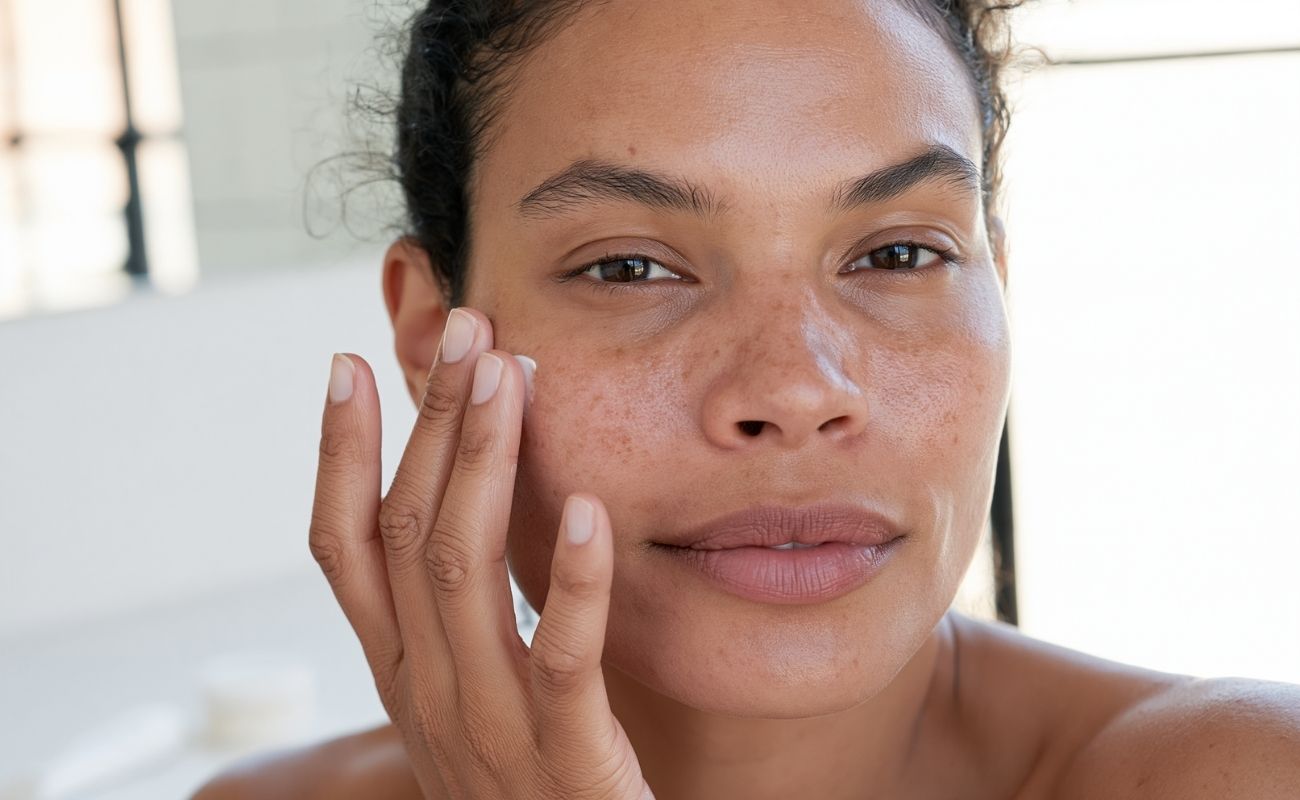

How to consult an online dermatologist for post-inflammatory hyperpigmentation?
Through Miiskin, you can connect with a board-certified dermatologist for personalized post-inflammatory hyperpigmentation (PIH) treatment online. After reviewing your skin concern and photos, your dermatologist can recommend a treatment plan to help fade dark spots and even out skin tone, including prescription medications or customized formulas when appropriate.

Submit your skin concern
Describe your skin concern, answer a brief questionnaire, and upload your photos.

Dermatologist review
A board-certified dermatologist licensed in your state reviews your information and photos.

Get your treatment plan
Receive your treatment plan. Choose delivery or pickup at your preferred pharmacy.
Post-inflammatory hyperpigmentation (PIH) treatment options
Through Miiskin, you can ask your dermatologist to prescribe an FDA-approved medication or a customized formula tailored to your skin, whichever option you feel most comfortable with.
FDA-approved medications
You can choose an FDA-approved medication (brand-name or generic), which can be filled at any pharmacy nationwide. These medications have been reviewed by the FDA for safety, effectiveness, and quality, and are widely used in dermatology.
- Tretinoin(Generic Retin-A®)
- Tazarotene(Generic Tazorac®)
- Tri-Luma®(Triple combination cream)
- Azelaic acid 20%(Generic Azelex®)
- Adapalene(Generic Differin®)
Prescribed only if medically appropriate. Your dermatologist decides which medication fits your case.
Customized formulas
Customized prescription formulas combine multiple active ingredients into one product tailored to your needs. They’re prepared by our trusted partner, Foothills Pharmacy, and delivered to your door. Most formulas are $48.99 with delivery included.
- ✓Hydroquinone
- ✓Tretinoin
- ✓Kojic acid
- ✓Niacinamide
- ✓Azelaic acid
- ✓Tranexamic acid
- ✓Fluocinolone
- ✓Hydrocortisone
- ✓Vitamin C
Compounded medications are not reviewed by the FDA for safety or efficacy.

How does Miiskin compare to other online PIH services?
Swipe to compare →
| Feature | Miiskin | Nurx | Musely | Curology |
|---|---|---|---|---|
| Provider type | Board-certified dermatologist | Physician, NP or PA | Board-certified dermatologist | Physician, NP or PA |
| Choose your own provider | Yes | No | No | No |
| FDA-approved medications | Yes | Yes | No** | No** |
| Customized / compounded formulas | Yes | Yes | Yes | Yes |
| Choice of pharmacy | Yes | No | No | No |
| Subscription required | No | Yes | Yes | Yes |
| Response time | ~24 to 48 hrs* | ~2 days | ~24 hrs | 2 to 3 days |
* On average, Miiskin dermatologists respond in less than a day.
** PIH prescriptions from Musely and Curology are offered as compounded custom formulas only. Neither provides a standard FDA-approved generic option.
Comparison based on information published on each service’s website, October 2026.
What is PIH?
Post-inflammatory hyperpigmentation (also known as PIH), is a type of darkening of the skin that appears after inflammation or injury. It happens when the skin produces excess melanin (pigment) in response to irritation—commonly after acne, eczema, bug bites, rashes, or skin trauma. PIH shows up as flat brown, tan, or dark spots and can take weeks to months to fade. Dermatologists often treat PIH with prescription creams, chemical exfoliants, and sun protection to improve discoloration and prevent it from worsening.
Causes of PIH

Burns
Including minor heat burns or sunburns, that trigger excess melanin production.

Inflammatory conditions
Eczema, dermatitis, or other inflammatory skin conditions can cause PIH.

Genetics
Genetics can increase your skin’s tendency to develop PIH, especially in darker skin tones.

Acne breakouts
Deep or cystic pimples can cause inflammation and excess melanin production and lead to PIH.

Medication-induced
Certain medications can irritate the skin and cause inflammation or sun sensitivity, leading to PIH.

Cosmetic procedures
Chemical peels, lasers, or waxing can irritate or inflame the skin, sometimes resulting in PIH.
How to prevent PIH?
Although you cannot fully prevent the development of hyperpigmentation on your skin you can do three things to reduce the chance of developing or worsening it.

Protect your skin from the sun
Wear protective clothing, and apply a broad-spectrum sunscreen (SPF 30 or higher), reapplying often when outdoors.

Keep your acne under control
Inflammatory acne commonly leads to PIH once it heals. Treating acne early can help prevent new dark marks from forming.

Avoid picking or irritating your skin
Picking acne, scratching rashes, or irritating the skin through harsh skincare can increase inflammation and the risk of PIH.

Meet the board-certified dermatologists
Miiskin partners exclusively with independent, board-certified dermatologists who have helped more than 200,000 people through telehealth.
Get a clear overview of the dermatologists in the Miiskin network, including where they’re licensed to practice, their experience, specialties, typical response time, and number of telehealth consultations completed.

Dark spots, uneven tone or fine lines?
Discoloration and signs of aging can look similar but respond to different treatments. Brown patches on the cheeks, forehead or upper lip may be melasma. Dark marks left behind after a breakout are often post-inflammatory hyperpigmentation (PIH). Fine lines and rough texture are usually treated with anti-aging prescriptions. A board-certified dermatologist can review your photos and recommend the right approach. Browse all skin, hair and nail conditions treated online.

Clinically proven ingredients
 Clinical trials show that 77% of patients applying Tri Luma were almost clear of pigmentation by week 82.
Research shows that 72% of patients with melasma who used hydroquinone for 4 months saw an overall improvement3.
Patients using azelaic acid over a 24-week treatment period, showed that it significantly reduced the intensity of pigmentation4.
EXPLORE ARTICLES




References:
1https://www.webmd.com/skin-problems-and-treatments/freckles-skin-spots
2https://pubmed.ncbi.nlm.nih.gov/16901182/
3https://pubmed.ncbi.nlm.nih.gov/12709008/
4https://www.sciencedirect.com/science/article/abs/pii/S0149291898800763
 Request a prescription for PIH!