
Request a benzoyl peroxide prescription
*Average online dermatologist response time from July-September 2026: 18.6 hours
- Independent board-certified dermatologists
- Choice of generic or customized formulas
- No medication subscriptions
Benzoyl peroxide is usually prescribed for:



What is benzoyl peroxide and what is it used for?
Benzoyl peroxide is a topical medication used in the treatment and prevention of acne, papulopustular rosacea and non-infectious folliculitis in individuals 12 years old and older. Because it works differently from antibiotics, bacteria does not become resistant to benzoyl peroxide, making it a reliable long-term option for acne treatment. Benzoyl peroxide works in the following ways:
- It kills acne-causing bacteria on the skin
- It reduces inflammation (redness and swelling)
- It helps remove dead skin cells, which can clog pores1 2 3
Dermatologist-prescribed compounded benzoyl peroxide
If you are interested in a customized benzoyl peroxide cream, select Foothills as your pharmacy and your dermatologist will determine additional ingredients based on your skin’s needs.
Important Disclaimer: Compounded medications are not reviewed by the FDA for safety or efficacy.

Commonly prescribed benzoyl peroxide creams
Board-certified dermatologist Dr. Amit Om notes that dermatologists tailor each prescription by evaluating symptoms, severity, and other clinical factors to ensure appropriate care.
Benzoyl peroxide + adapalene

Benzoyl peroxide + clindamycin

Benzoyl peroxide + tretinoin

Benzoyl peroxide +
clindamycin + niacinamide

Benzoyl peroxide +
erythromycin

Benzoyl peroxide +
adapalene + clindamycin

Product packaging shown for visual reference only.
Important Disclaimer: Compounded medications are not reviewed by the FDA for safety or efficacy.

How to request a benzoyl peroxide cream prescription online
- Select “Start consultation” to sign-up with Miiskin.
- Use the consultation form to request benzoyl peroxide.
- If medically appropriate, you will receive a prescription from a dermatologist.
- Purchase your benzoyl peroxide in the pharmacy of your choice.
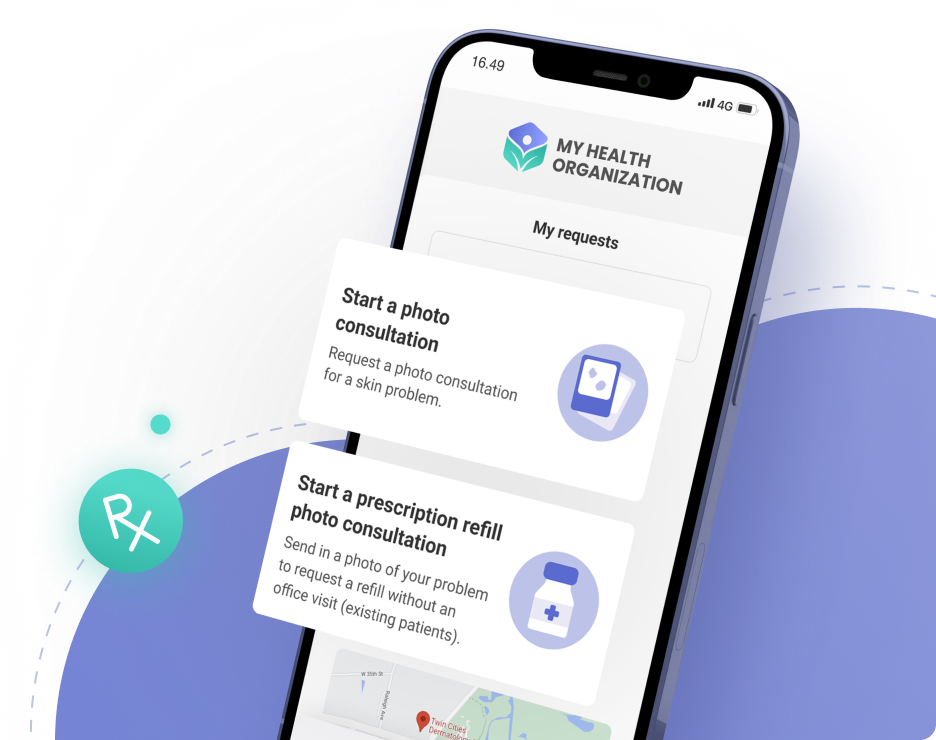

Process to getting a prescription for benzoyl peroxide online
Through an online consultation, you connect with a dermatologist. Upon reviewing your case, if the doctor determines that a cream with benzoyl peroxide is appropriate for you, they will provide a prescription that you can get from the pharmacy of your choosing.
Side effects of benzoyl peroxide
- May cause skin dryness and peeling
- May lead to redness and irritation when applied
- Can cause itching or mild burning/stinging sensation
- May result in swelling or tenderness of treated skin areas
- May trigger contact dermatitis or an allergic reaction
- May bleach hair, fabrics, or towels that come into contact with it

How to apply benzoyl peroxide?
According to Dr. Trisha Khanna, a board-certified dermatologist, if you have been prescribed with clindamycin, this is how you should use it.

1. Cleanse gently
Cleanse the skin gently and pat dry before application

2. Use a very small amount
Start with a thin layer to the affected area (face, chest, back), not just individual pimples

3. Use as prescribed
Use a low strength first (such as 2.5% or 5%) to help your skin gradually adjust to the treatment, minimizing irritation, redness, and dryness

4. Do Not Overuse
Apply once daily at first, then increase to twice daily if tolerated

6. Avoid Sensitive Areas
Avoid the eyes, lips, and inside of the nose

7. Moisturize After Use
Follow with a non-comedogenic moisturizer to limit dryness

8. Use sunscreen daily
Use a broad-spectrum sunscreen (SPF 30 or higher) each morning, as treated skin can be more easily irritated by sun exposure

9. Clean Hands After Application
Wash hands after use to prevent bleaching of fabrics or hair
Benzoyl peroxide and other medications
Ingredients that can be used alongside benzoyl peroxide
These ingredients pair well with benzoyl peroxide and can improve results or reduce irritation when used correctly:
 Salicylic acid – helps unclog pores and reduce oil (best used at a different time of day if skin is sensitive)
Niacinamide – calms inflammation and helps support the skin barrier
Azelaic acid – reduces acne, redness, and post-acne marks
Topical antibiotics (e.g., clindamycin, erythromycin) – often combined with benzoyl peroxide to reduce bacteria and resistance
Moisturizers with ceramides, glycerin, or hyaluronic acid – help counter dryness and irritation
Sunscreen (broad-spectrum SPF 30+) – protects irritated skin and prevents dark spots
Ingredients to avoid or use cautiously with benzoyl peroxide
These ingredients may cause excessive irritation or reduce effectiveness when layered directly with benzoyl peroxide:
 Topical retinoids (tretinoin, adapalene, tazarotene) – benzoyl peroxide can inactivate some retinoids depending on the formulation; use at different times (e.g., benzoyl peroxide in the morning, retinoid at night)
Vitamin C (L-ascorbic acid) – can be destabilized by benzoyl peroxide and increase irritation. Can also leave an orange stain on the skin
Harsh exfoliating acids (high-strength AHAs like glycolic or lactic acid) – may cause over-exfoliation and irritation
Physical exfoliants (scrubs, brushes) – increase the risk of redness and skin barrier damage
Provider & Prescription Information
Miiskin connects patients with independent dermatologists who provide care through their private practices. Compounded prescriptions can be ordered via Miiskin and are dispensed by Foothills pharmacy. Generic prescriptions can be filled at any local or online pharmacy.

Start a virtual consultation to request a custom benzoyl peroxide cream
References:
1https://my.clevelandclinic.org/health/drugs/18363-benzoyl-peroxide-cream-gel-or-lotion
2https://www.ncbi.nlm.nih.gov/books/NBK537220/
3https://www.webmd.com/drugs/benzoyl-peroxide
 Need a benzoyl peroxide prescription for you or your child?