Tazarotene cream: a dermatologist’s guide for patients
This comprehensive dermatologist guide helps patients learn everything they need to know about tazarotene, including its benefits, side effects, uses, formulations, doses, and how to get started with it.

Table of Content:
What is tazarotene? | What is it used for? | How does it work? | How to get a prescription? | Tazarotene price | Side effects | How-long does it take to work? | How to apply? | Formulations | Concentrations | Expiration date | Tazarotene vs tretinoin | Tazarotene vs adapalene | Tazarotene vs retinol | Tazarotene vs trifarotene (Aklief) | Tazarotene vs isotretinoin | Tazarotene + clindamycin | Tazarotene + hydroquinone | Tazarotene + Pracasil plus | Tazarotene + niacinamide | FAQ

Our commitment to producing high-quality content:
The information presented in this article is based on scientific research and the professional advice of our Content Medical Reviewers, who are experts in the field of Dermatology. How we write our content →
What is tazarotene cream?
Tazarotene (also known commercially as Fabior, Avage, Tazorac, or Arazlo) is a topical prescription medication in the retinoid family (that means it’s chemically related to vitamin A). It’s a third‑generation acetylenic retinoid designed to affect the way skin cells behave. Tazaraotene is teratogenic which means it cannot be used during pregnancy.
- It’s available as a cream, gel, or lotion (0.05% and 0.1%) and is applied to the skin once daily as directed by your healthcare provider.
Tazarotene itself is a prodrug, once it’s on your skin it’s converted into its active form, called tazarotenic acid, which then binds to specific receptors in your skin cells.
What is tazarotene cream used for?
Acne
Tazarotene is approved for the topical treatment of mild to moderate acne. It works by normalizing follicular keratinization (the process that clogs pores) and reducing inflammatory lesions.
Several studies show that tazarotene gel reduces acne lesions more effectively than some other retinoids like adapalene or tretinoin in patients.
Photo‑damaged skin / wrinkles and pigmentation
Tazarotene has also been used off‑label for improving sun‑damaged skin, fine lines, and pigment changes, by stimulating collagen production and enhancing skin turnover.
Plaque psoriasis
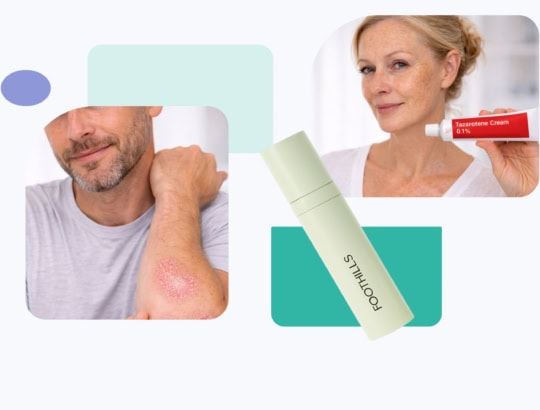
This is a chronic, immune mediated condition where skin cells grow too quickly, leading to thick, red, scaly plaques. Tazarotene modulates abnormal cell growth and inflammation in psoriatic skin.
Multiple studies show that applying tazarotene daily reduces the size, thickness, and scaling of psoriatic plaques. It can be used with or without a corticosteroid, but combining with a steroid can improve efficacy and reduce irritation.
How does tazarotene cream work?
Dr. Amit Om, board-certified dermatologist, who offers online consultations via Miiskin explains the mechanism of action of tazarotene.
- Targets skin cell receptors: Tazarotene connects to special receptors in your skin cells that control how fast they grow, divide, and mature.
- Helps skin cells behave normally: In conditions like acne or psoriasis, skin cells can grow too fast or shed unevenly. Tazarotene helps slow things down and keeps skin cell turnover more balanced.
- Reduces redness and swelling: It calms inflammation, which helps with skin conditions that cause irritation or bumps.
- Stays mostly in your skin: Only a tiny amount enters your bloodstream. Most of it stays in the skin and breaks down quickly, which lowers the chance of side effects.
Is there a generic tazarotene?
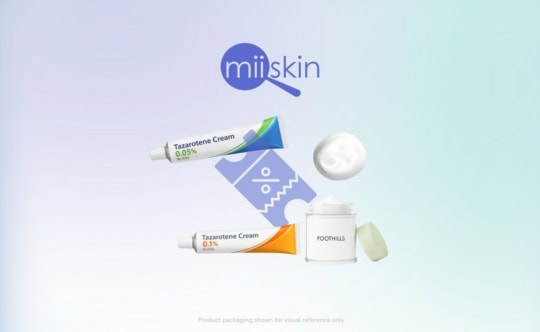
Yes, generic tazarotene is available in the United States, typically in cream and gel formulations at strengths such as 0.05% and 0.1%. The generic version contains the same active ingredient and is considered therapeutically equivalent to the brand-name product. By having a consultation with a dermatologist via Miiskin you can get access to generic and compounded tazarotene dispensed by Foothills pharmacy. Most Foothills formulas (including tazarotene-based) are $48.99 with a few advanced formulas priced at $48.99.
Is tazarotene cream available over-the-counter?
No, tazarotene is not available over the counter in the United States. It’s a prescription-only medication because it’s a strong retinoid that can cause irritation, dryness, and other side effects if not used correctly. Besides, tazarotene is considered teratogenic which means it can cause birth defects if used during pregnancy. A dermatologist needs to evaluate your skin condition and decide if tazarotene is appropriate and safe for you to use.
How to get a prescription for tazarotene cream online?
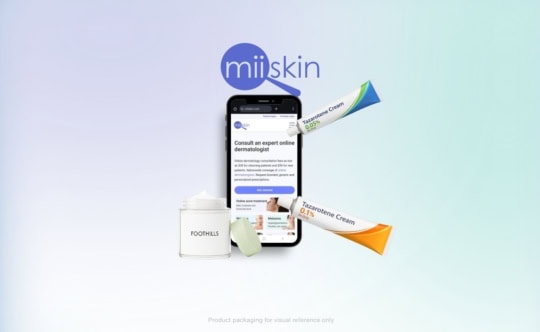
To get a prescription for tazarotene cream online, you can consult a dermatologist via Miiskin. You just need to upload photos of your skin and fill out a brief medical questionnaire. Your dermatologist will review your case and, if appropriate, prescribe tazarotene. First time consultation is $59 and prescription renewal visits are around $39.
What is the tazarotene cream price?
Through Miiskin, you can purchase generic tazarotene cream from Foothills Pharmacy for $48.99. A combination formula that includes tazarotene and Pracasil plus is available for $68.99. Medications are sold on-demand, with no monthly subscription required.
Important Disclaimer: Compounded medications are not reviewed by the FDA for safety or efficacy.
What are the best tazarotene coupons?
We have complied the best tazarotene coupons so you can compare them and make an informed decision. Via Miiskin, you can purchase generic tazarotene cream from Foothills Pharmacy for $48.99 and some formulas are available for $68.99.
Important Disclaimer: Compounded medications are not reviewed by the FDA for safety or efficacy.
Side effects of tazarotene
These side-effects of tazarotene are usually mild and often lessen after the first few weeks as your skin adjusts.Using a moisturizer before and after applying tazarotene and using it every other day can help your skin get adjusted to the medication. Additionally, Dr. Om says this medication should not be used by pregnant women or women who are trying to become pregnant.
Because tazarotene affects how skin cells behave, irritation is the most frequent side effect and can show up as:
- Redness
- Dryness and peeling
- Burning or stinging
- Itching
These are normal and expected with this medication.
How long does it take for tazarotene to work?
Dr. Om says that tazarotene usually starts to show improvement in your skin after 1 to 2 weeks, but it can take up to 4 to 8 weeks or longer for full results, depending on what you’re treating (like acne or psoriasis). He also added that it’s common to experience some irritation, dryness, or even a temporary worsening of symptoms in the first few weeks (this is part of the skin adjusting) and doesn’t mean it’s not working. Sticking with it consistently, as directed by your provider, is key to seeing the best results.
How to use tazarotene on the face?
Dr. Amit Om, explains how to use tazarotene step by step.
1. Cleanse gently
Wash your face with a mild, non-foaming cleanser and pat dry. Wait about 10–20 minutes to make sure your skin is completely dry since applying tazarotene to damp skin increases the risk of irritation.
2. Apply a thin layer of moisturizer
Apply a light layer of a gentle moisturizer to your entire face. This creates a “buffer” to reduce dryness, especially if you’re just starting out.
3. Apply a pea-sized amount of tazarotene
Squeeze a pea-sized amount onto your fingertip, this is enough for the entire face. Dot it onto your forehead, cheeks, chin, and nose, then gently spread a thin, even layer, avoiding the eyes, lips, and corners of the nose.
4. Follow with another layer of moisturizer
One or two minutes after the cream absorbs, apply another layer of moisturizer over your face. This is the second part of the “sandwich” and helps lock in hydration while minimizing irritation.
5. Use only at night
Tazarotene should only be used once daily at bedtime, as it can make your skin more sensitive to sunlight.
6. Use sunscreen every morning
Apply a broad-spectrum sunscreen (SPF 50) every morning (even on cloudy days) to protect your skin from increased sun sensitivity caused by tazarotene.
Extra tips from Dr. Om:
Do not use during pregnancy: This drug is teratogenic which means you cannot use it if you are trying to become pregnant, are pregnant or breast feeding.
Start slow: Use it 2–3 nights per week at first, and increase as your skin gets used to it.
Avoid harsh products: Stop using exfoliants, alcohol-based toners, or strong acids while your skin adjusts.
Be patient: It may take 6–12 weeks to see results, and some irritation early on is normal.
Tazarotene formulations
Tazarotene is available in several topical formulations, including:
- Cream – typically more moisturizing and better for dry or sensitive skin
- Gel – lighter and often preferred for oily or acne-prone skin
- Foam – spreads easily and may be useful for larger or hair-bearing areas like the scalp
- Lotion – a newer formulation combining efficacy with improved tolerability
Tazarotene concentrations
Tazarotene comes in the following concentrations:
- 0.1% – standard strength for most skin conditions
- 0.05% – lower strength, often used to start treatment or for sensitive skin
- 0.045% – available in newer lotion formulations designed for better tolerability
Tazarotene shelf life and expiration date
Dr. Om explains that once open, you should not use your tazarotene for more than 12 months to ensure maximum potency and reduce the risk of contamination. Always store it at room temperature, away from heat, moisture, and direct sunlight to preserve its stability.
The expiration date is printed on the packaging, and it’s important not to use the medication past that date, as its effectiveness and safety may decrease.
Comparing tazarotene to other retinoids
Retinoids play an important role in treating a wide range of skin concerns, including acne, signs of aging, and uneven skin texture. Among them, tazarotene is a powerful and effective option, commonly used for acne, psoriasis, and anti-aging. While it is just one of several retinoids available—each with its own strengths—as a general rule, you should avoid using two different retinoids at the same time. Because they work in similar ways, combining retinoids can increase the risk of skin irritation.
Tazarotene vs tretinoin
Dr. Om says that tazarotene and tretinoin are both prescription topical retinoids used for acne and signs of aging, but studies show tazarotene may be slightly more effective in reducing acne lesion counts compared to tretinoin, though it also tends to be more irritating and less well tolerated early in treatment. In addition, tazarotene is also FDA‑approved for psoriasis in addition to acne, while tretinoin is primarily used for acne and photoaging.
Tazarotene vs adapalene
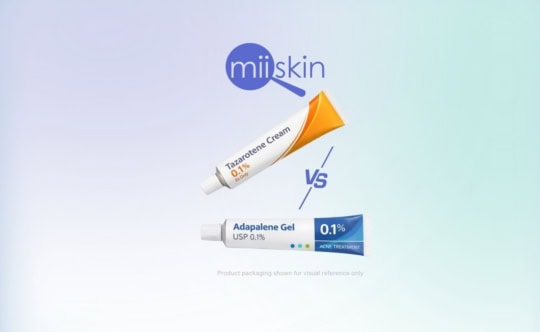
Dr. Om explains that compared with adapalene, tazarotene tends to be more potent against acne lesions but also has a higher irritation profile, whereas adapalene is a chemically stable retinoid that causes less irritation and can be combined directly with benzoyl peroxide; adapalene is often chosen first for sensitive or mild‑to‑moderate acne.
Tazarotene vs retinol
Dr. Om says that tazarotene is a prescription‑strength retinoid that works directly as an active molecule in the skin, making it substantially more potent than over‑the‑counter retinol, which must first convert into active retinoic acid and therefore acts more slowly and with far less irritation; retinol is often used for mild anti-aging concerns.
Tazarotene vs trifarotene (Aklief)
Dr. Om explains that Tazarotene and trifarotene are both prescription topical retinoids for acne, but trifarotene is a newer “fourth‑generation” retinoid that selectively targets the RAR‑γ receptor, potentially offering effective acne treatment with a more targeted action and possibly improved tolerability, though long‑term comparative data versus tazarotene are still emerging.
Tazarotene vs isotretinoin
Dr. Om says although they are both retinoids, they are very different. Tazarotene is a topical retinoid applied directly to the skin for acne, while isotretinoin is an oral prescription medication reserved for severe or cystic acne that has not responded to topical therapy. Isotretinoin works systemically to dramatically reduce oil production and often leads to long‑term remission but requires strict medical monitoring due to significant potential systemic side effects.
Combining tazarotene with other medications
Acne is often treated using a combination of two or more medications at the same time, a strategy commonly known as combination treatment.
Combination therapy is designed to target the different factors that contribute to acne, including excess oil production, acne-causing bacteria, inflammation, and abnormal skin cell turnover.
By combining medications that work in different ways, dermatologists can often achieve more effective and well-rounded results than with a single treatment alone.
For example, a common approach may include using a topical retinoid such as tazarotene alongside clindamycin. This helps address both clogged pores and bacterial overgrowth. When used appropriately, combination therapy can improve treatment effectiveness, speed up visible results, and reduce the risk of antibiotic resistance associated with antibiotic-only treatments.
Tazarotene and clindamycin
Dr. Om says this is a very common acne regimen, often prescribed together or found in fixed-dose combination products. A dermatologist might have you apply both at night, possibly starting with clindamycin, then tazarotene after it dries, and following with moisturizer. This pairing helps target both clogged pores and acne-causing bacteria.
Your dermatologist may also prescribe a compounded formula that includes clindamycin and tazarotene.
Important Disclaimer: Compounded medications are not reviewed by the FDA for safety or efficacy.
Tazarotene and hydroquinone
Dr. Om says that tazarotene and hydroquinone can be combined, and dermatologists often use this pairing to treat melasma, post-inflammatory hyperpigmentation (PIH), and uneven skin tone. Tazarotene increases skin cell turnover, helping fade dark spots more quickly, while hydroquinone directly lightens hyperpigmented areas by inhibiting melanin production. This combination is often used short-term and under close supervision.
Your dermatologist may also prescribe a compounded formula that includes tazarotene and hydroquinone.
Important Disclaimer: Compounded medications are not reviewed by the FDA for safety or efficacy.
Tazarotene and Pracasil plus
Dr. Om explains that tazarotene and pracasil plus are often used together to treat acne scars, especially indented types like icepick or boxcar scars. Tazarotene promotes collagen production and increases cell turnover, which can gradually improve skin texture and reduce the depth of scars over time. Pracasil Plus supports this process by hydrating the skin, softening scar tissue, and minimizing irritation caused by tazarotene. Together, they help enhance skin healing while making the treatment more tolerable, especially for those with sensitive or scar-prone skin.
Your dermatologist may also prescribe a compounded formula that includes tazarotene and pracasil plus.
Important Disclaimer: Compounded medications are not reviewed by the FDA for safety or efficacy.
Tazarotene and niacinamide
The combination of tazarotene and niacinamide is commonly used for the treatment of acne and signs of aging, as these ingredients complement each other well. When tazarotene and niacinamide are combined, their synergistic effects can provide multiple skin benefits, including reduced skin irritation, enhanced treatment efficacy, a simplified skincare routine, and a more affordable treatment option.
Your dermatologist may also prescribe a compounded formula that includes tazarotene and niacinamide.
Important Disclaimer: Compounded medications are not reviewed by the FDA for safety or efficacy.
Provider & Prescription Information
Miiskin connects patients with independent dermatologists who provide care through their private practices. Compounded prescriptions can be ordered via Miiskin and are dispensed by Foothills pharmacy. Generic prescriptions can be filled at any local or online pharmacy.
Article References:
https://cosmoderma.org/exploring-tazarotenes-role-in-dermatology/
https://pmc.ncbi.nlm.nih.gov/articles/PMC8750127/
https://www.sciencedirect.com/science/article/abs/pii/S0190962202615075
https://www.medcentral.com/drugs/monograph/561-397031/tazarotene-topical
https://www.mayoclinic.org/drugs-supplements/tazarotene-topical-route/description/drg-20067364
https://www.jaad.org/article/S0190-9622(97)80398-2/abstract
https://www.sciencedirect.com/science/article/abs/pii/S0190962202615075
https://academic.oup.com/bjd/article-abstract/135/s49/18/6682103
https://impactfactor.org/PDF/IJPQA/15/IJPQA%2CVol15%2CIssue3%2CArticle89.pdf
https://www.jaad.org/article/S0190-9622(00)61027-7/abstract
https://www.jaad.org/article/S0190-9622(00)39293-3/abstract
https://www.acne.org/what-topical-retinoid-formulation-is-most-effective-for-the-treatment-of-acne
https://www.mdpi.com/2227-9059/9/3/237
 Want a tazarotene prescription?
Consult a Dermatologist →