
Shingles treatment online by dermatologist
 Response time: 1-2 working days
- Board-certified dermatologists
- Service available in all 50 states
- Free choice of pharmacy
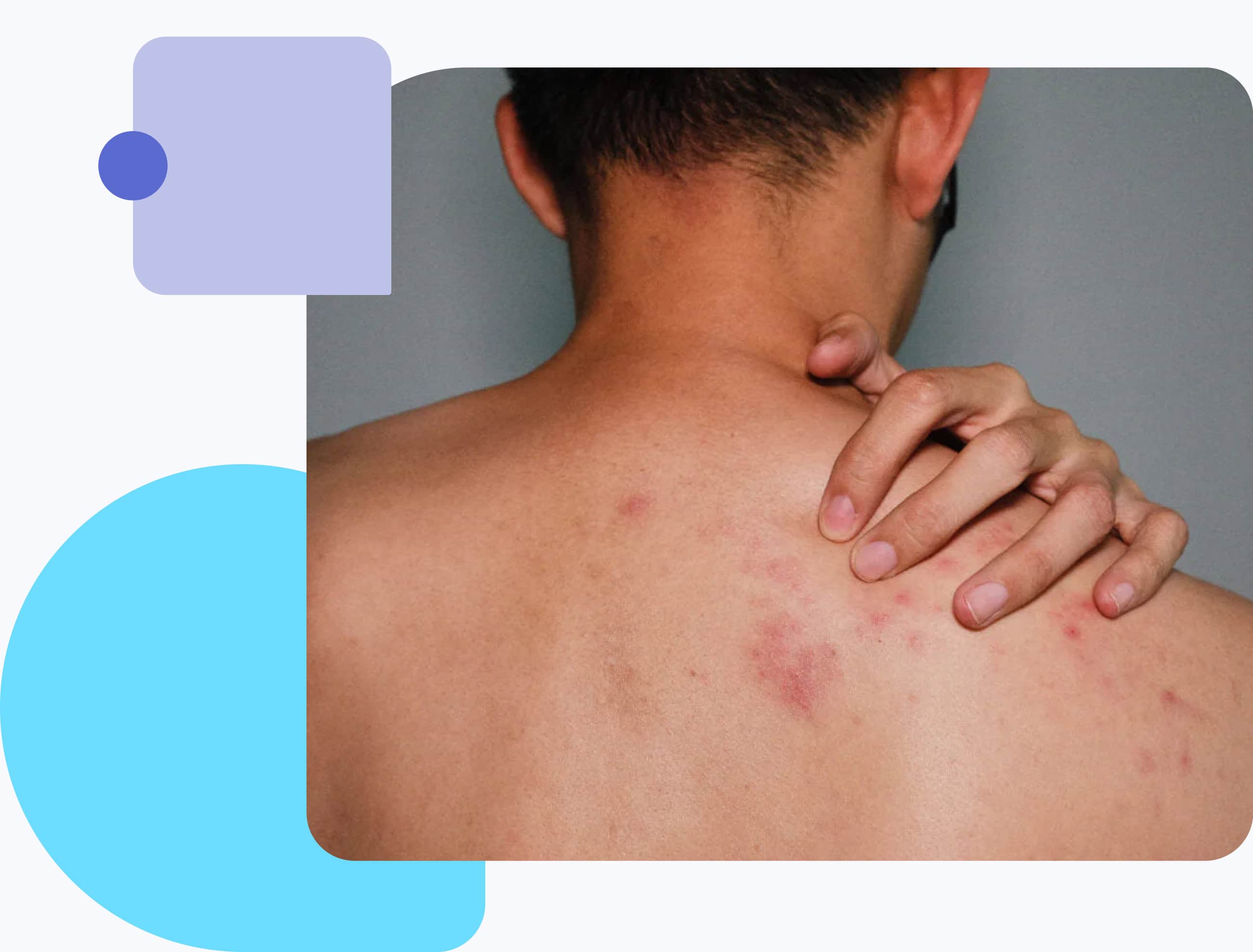
Table of Content:
What are shingles? | Should you seek medical care for shingles? | Can you get shingles treatment online? | Available shingles medications | Choose a dermatologist | Signs and symptoms of shingles | Shingles causes | Appearance, Contagion, and Recovery | How to prevent shingles? | Frequently asked questions about shingles

Why consult a dermatologist for shingles via Miiskin?

Don’t settle. Get care from a board-certified dermatologist you choose.

Consultations are $30 – $59 for returning and new patients.

Select your preferred pharmacy without any restrictions.

Seamless access to customized Foothills formulas if desired.
What are shingles?
Shingles is a painful skin rash caused by reactivation of the varicella-zoster virus, the same virus that causes chickenpox. After someone recovers from chickenpox, the virus remains dormant in nerve tissue and can reactivate years later, often when the immune system is weakened. Shingles typically appear as a band or strip of blisters on one side of the body or face and are often accompanied by burning, tingling, or sharp nerve pain.1
Should you seek medical care for shingles?
Dr. Anna Chacon, board-certified dermatologist who offers online care via Miiskin says you should seek medical care if you suspect you have shingles. Getting prescription antiviral medication (ideally within 72 hours of the rash appearing) can reduce the severity and duration of symptoms and lower the risk of complications such as postherpetic neuralgia.
Dr. Chacon emphasises you should seek prompt care especially if the rash involves your face or eyes, if you have severe pain, a weakened immune system, or if symptoms are widespread or worsening.
Can you get shingles treatment online?
Can an online dermatologist diagnose and treat shingles?
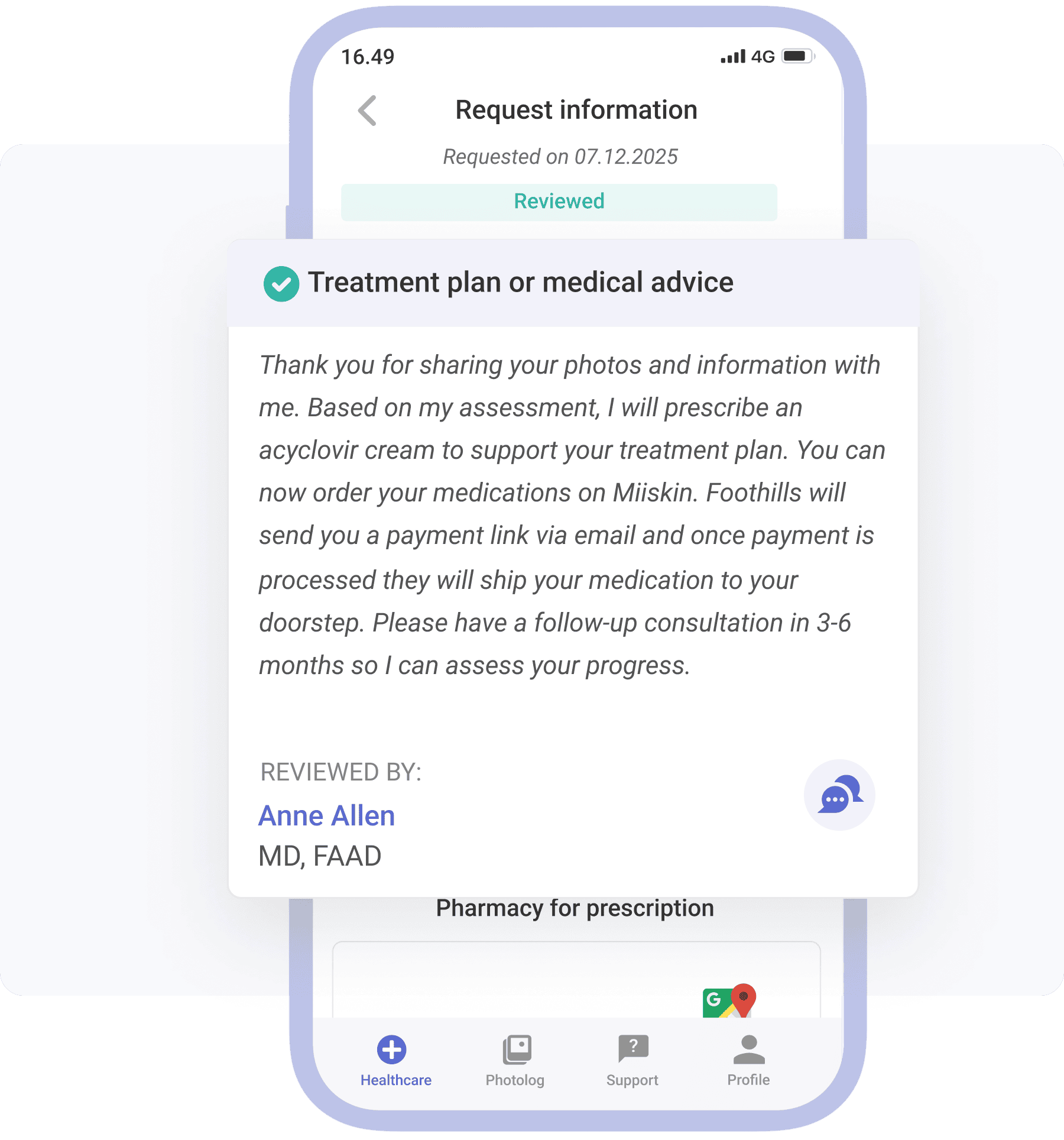
Yes, a dermatologist on the Miiskin network can diagnose and treat shingles online. By assessing your medical history and submitted images, a licensed dermatologist can confirm the diagnosis and recommend appropriate treatment, including prescribing antiviral medication when medically appropriate.
Do I need a prescription for shingles?
Yes, antiviral medications commonly used to treat shingles require a prescription. Through Miiskin, a dermatologist can evaluate your case and issue a prescription if shingles is diagnosed and treatment is needed.
How to get a shingles treatment?
To get shingles treatment, submit your symptoms and clear photos of the rash through Miiskin. A dermatologist will review your case, provide a diagnosis, and create a treatment plan, including a prescription if appropriate.
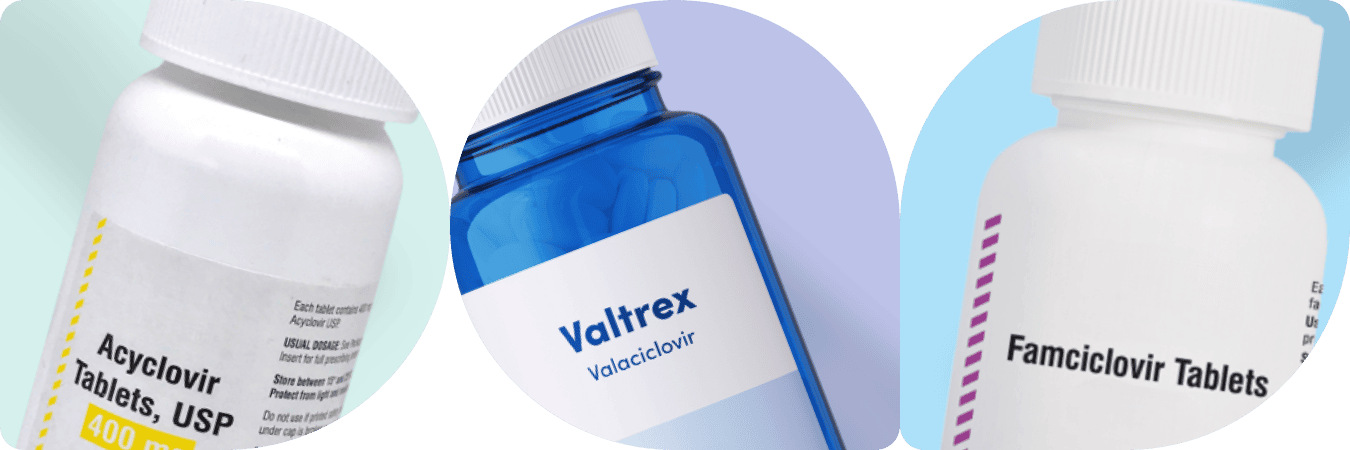
Anti-viral medications for shingles
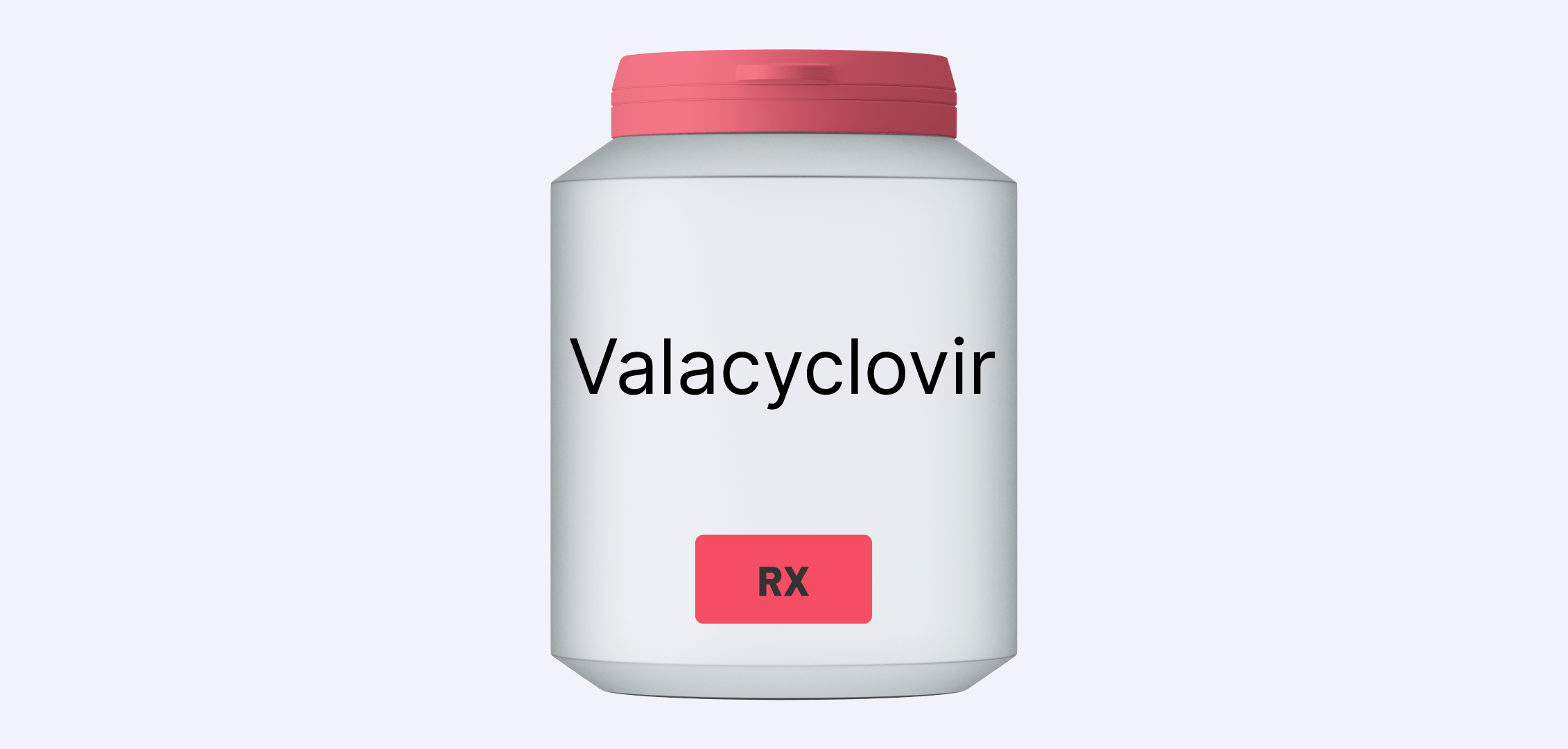
Valacyclovir
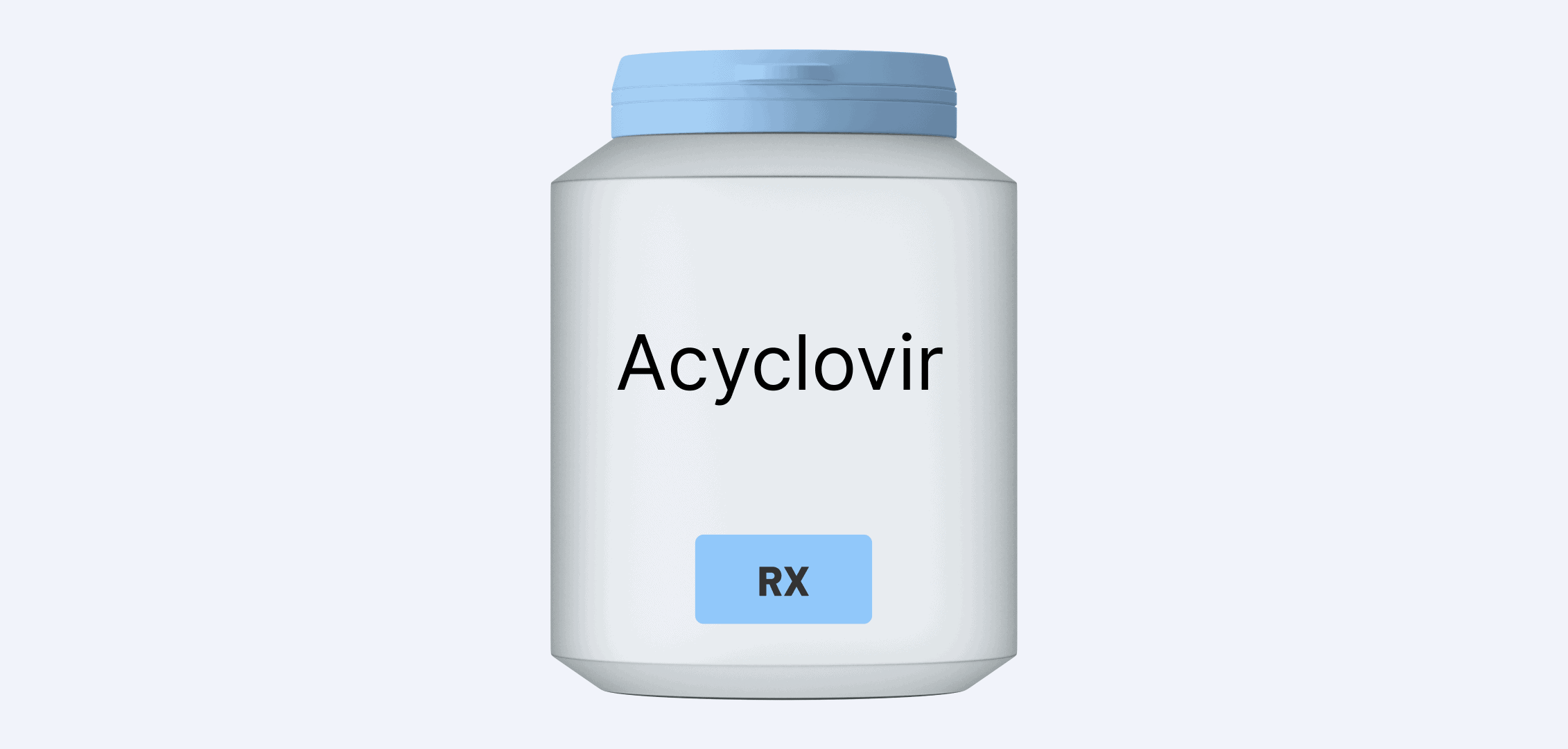
Acyclovir
Famciclovir
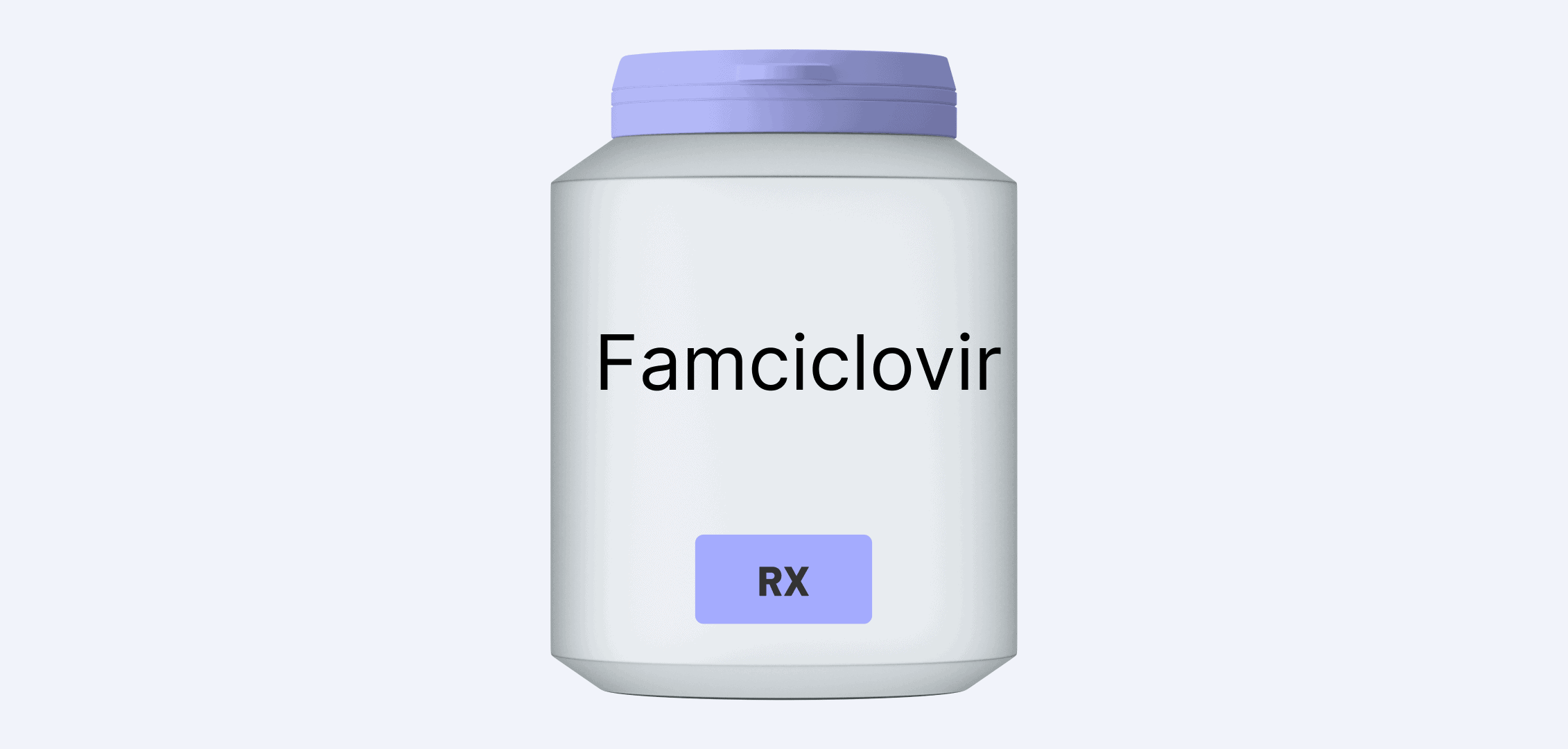
Product packaging shown for visual reference only.
Dermatologists for shingles infections
You’re in expert hands – Miiskin’s dermatologist partners have completed more than 50,000 virtual consultations.
Dr. Anna Chacon
Dermatologist
Licenses: 50 U.S. states

Dr. Ryan Trowbridge
Dermatologist
Licenses: CA, CT, NY, TX, NE, IL.

Dr. Amit Om
Dermatologist
Licenses: NC, SC, FL, GA, IL, CT, TX, CA.



Dr. Eric Howell
Dermatologist
License: North Carolina.

Dr. Sarita Nori
Online Dermatologist
Licenses: FL, MA, TX, NH, CT, CA, ME.
Provider & Prescription Information
Miiskin connects patients with independent dermatologists who provide care through their private practices. Compounded prescriptions can be ordered via Miiskin and are dispensed by Foothills pharmacy. Generic prescriptions can be filled at any local or online pharmacy.
Signs and symptoms of shingles
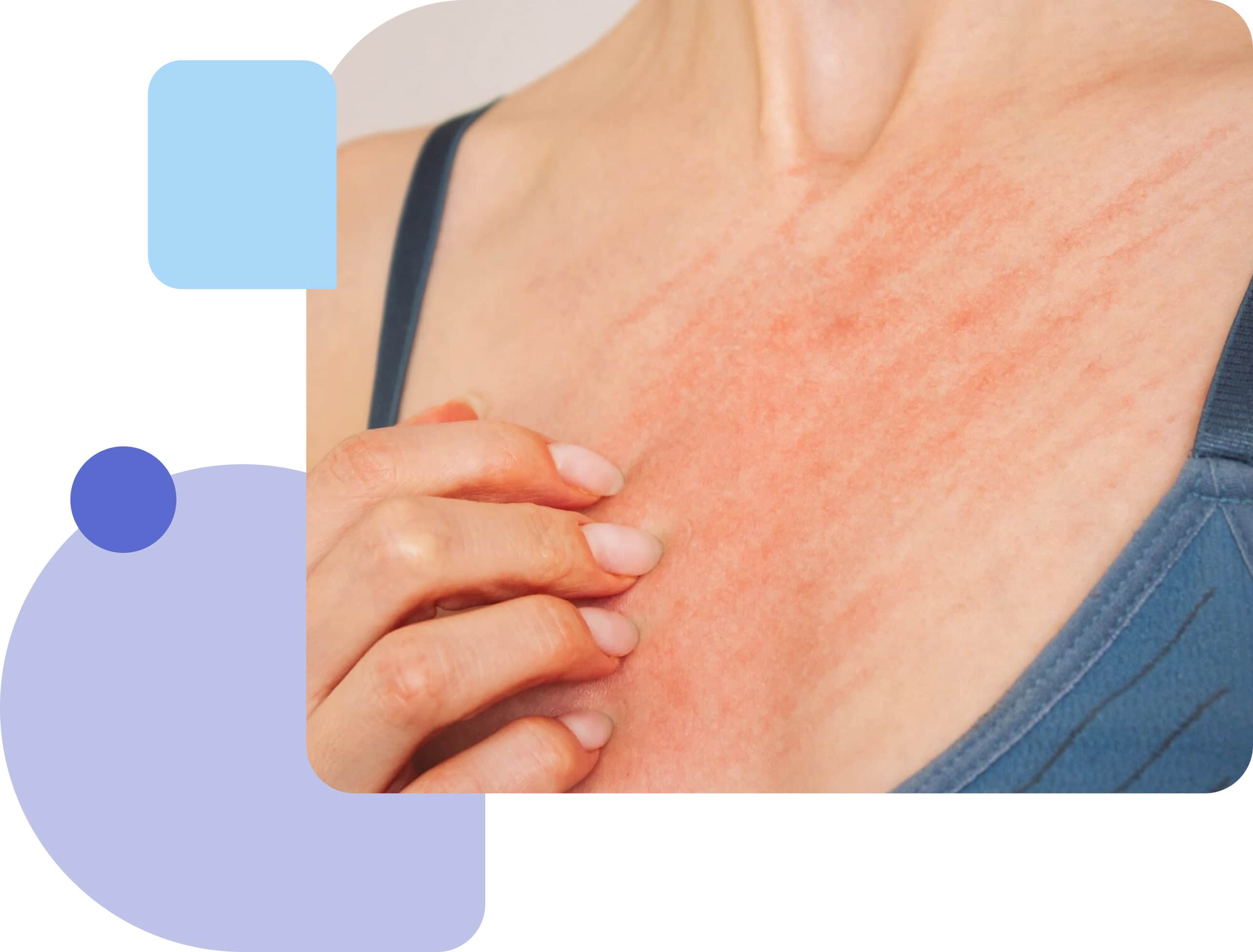
- Burning, tingling, or sharp nerve pain in one area
- Red rash appearing in a band on one side
- Clusters of fluid-filled blisters that crust over
- Itching and increased skin sensitivity
- Fever with general body discomfort
- Headache and feeling unusually tired3
What causes shingles?
Shingles is caused by the reactivation of the varicella-zoster virus, the same virus that causes chickenpox. After a person recovers from chickenpox, the virus remains inactive (dormant) in the body’s nerve tissue. Years later, it can reactivate, often when the immune system is weakened due to aging, stress, illness, or certain medications, and travel along nerve pathways to the skin, causing a painful rash and blisters.2
Shingles Explained: Appearance, Contagion, and Recovery
Where do shingles usually appear on the body?
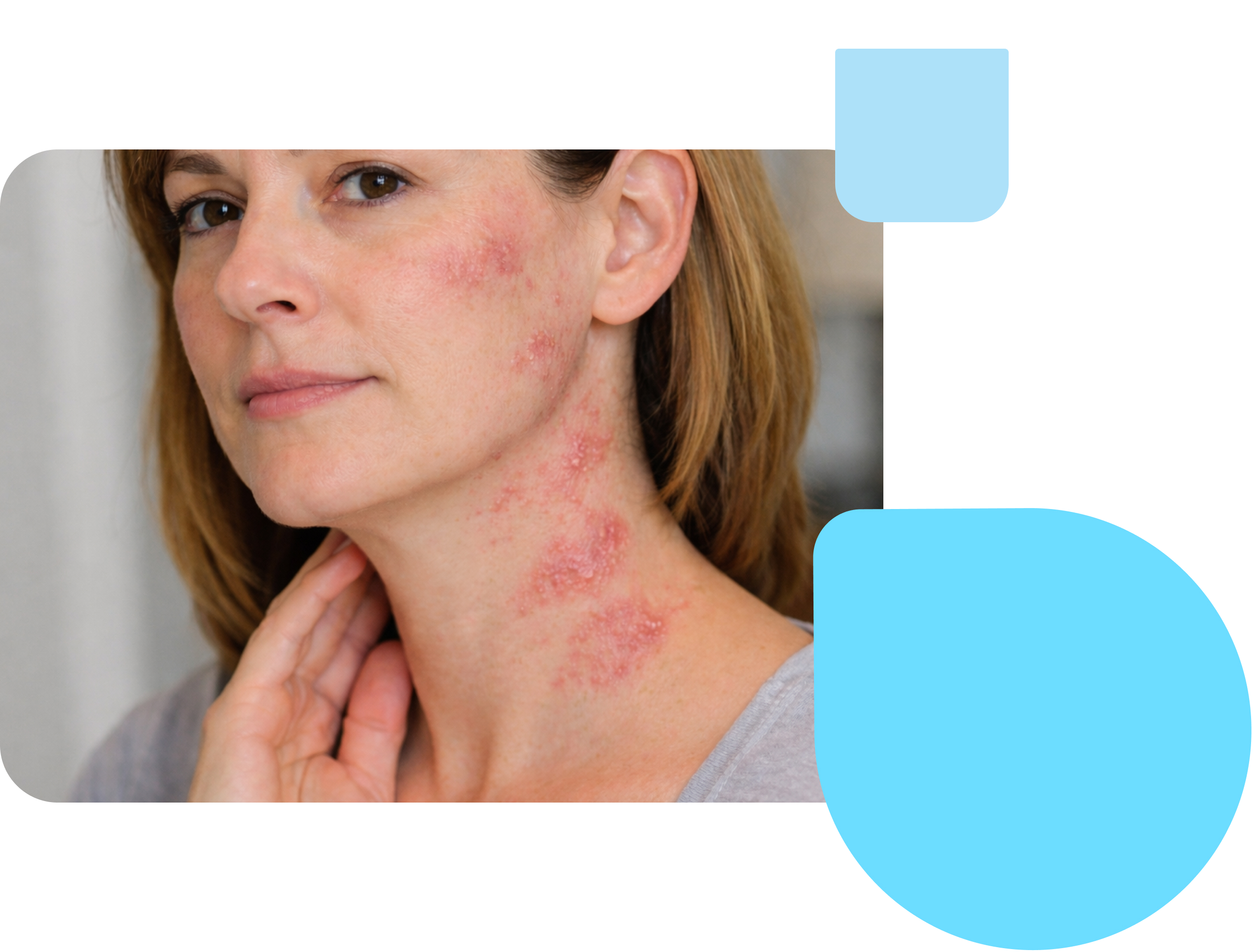
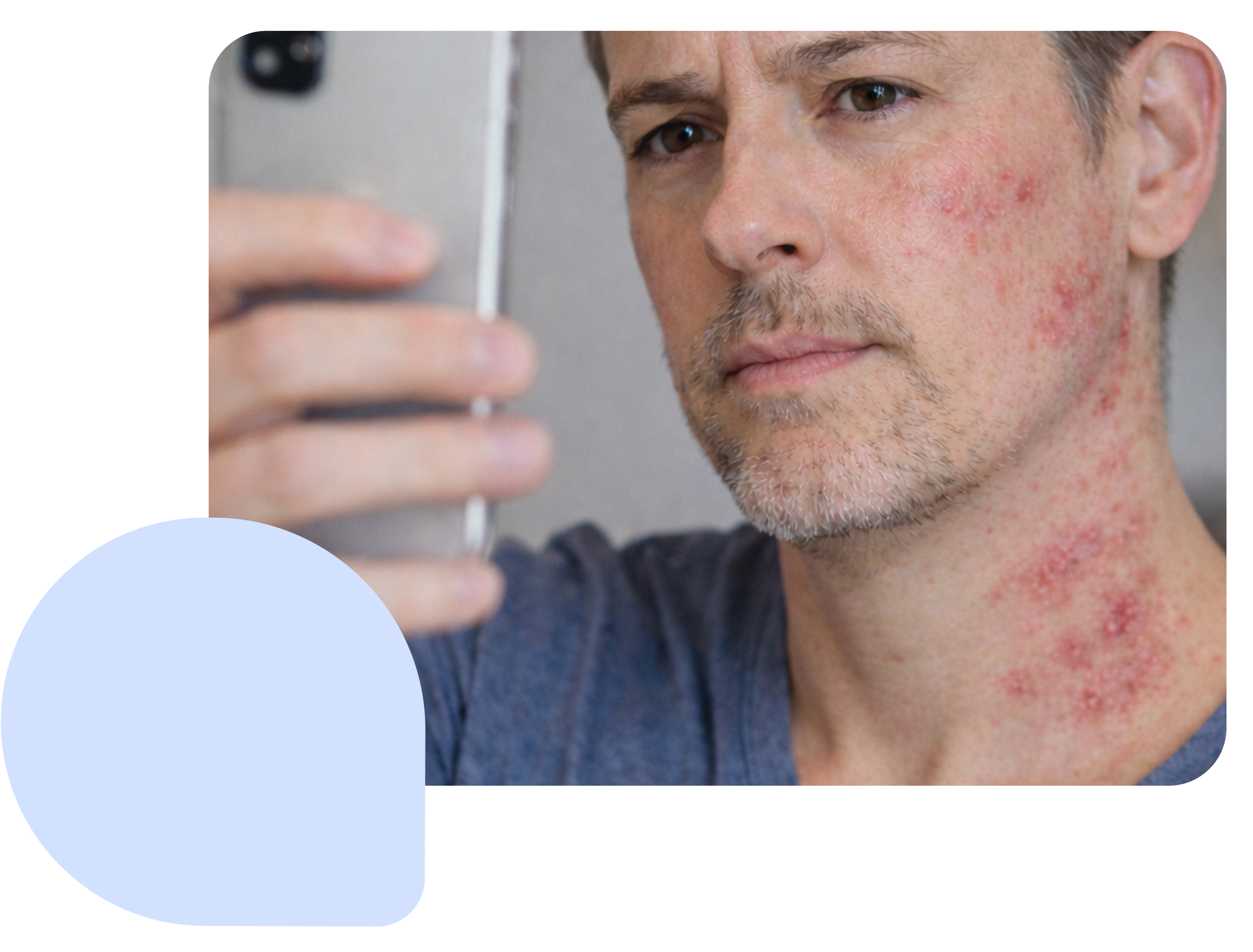
Shingles typically presents as a painful, fluid-filled blistering rash on one side of the body or face. It most often appears in a band or stripe across the chest, abdomen, or back, though it can also affect the face, neck, or waist. The rash almost always stays on one side and rarely crosses the body’s midline.4
Is shingles contagious?
Shingles itself is not spread from person to person, but the varicella-zoster virus can be transmitted from someone with active shingles to a person who has never had chickenpox or has not been vaccinated. In that case, the exposed person would develop chickenpox, not shingles. The virus spreads through direct contact with the fluid from shingles blisters and is not spread before the rash appears or after the blisters have crusted over. Covering the rash and avoiding close contact with high-risk individuals, such as pregnant people, newborns, and those with weakened immune systems, can help reduce the risk of transmission.5
Shingles stages and timeline: How long does it last?
Dr. Chacon says shingles develops in distinct stages, beginning with early nerve-related symptoms before a rash appears and progressing through blistering and healing phases. The condition typically affects one side of the body along a specific nerve pathway. The overall timeline from first symptoms to skin healing is about 2–4 weeks total in most cases.
 Prodromal stage:
◦ Duration: about 1–5 days (sometimes up to 7 days)
◦ Burning, tingling, itching, or sharp nerve pain occurs before any visible rash appears.
Rash stage:
◦ Duration: 1–3 days
◦ A red rash develops, usually in a band on one side of the body or face. The rash quickly progresses toward blister formation.
Blister stage:
◦ Duration: about 3–7 days
◦ Fluid-filled blisters form, enlarge, and may cluster. They can break open and ooze before starting to dry.
Crusting stage:
◦ Duration: about 7–10 days
◦ Blisters dry out, scab over, and stop being contagious once fully crusted.
Healing stage:
◦ Duration: about 2–4 weeks from rash onset
◦ Scabs fall off and skin gradually clears. Nerve pain (postherpetic neuralgia) can last weeks, months, or longer, especially in adults over 50.
How to prevent shingles?
Dr. Chacon says you can prevent shingles by getting the shingles vaccine, which significantly reduces the risk of developing shingles and its complications, including long-term nerve pain. The CDC recommends the Shingrix vaccine for adults aged 50 and older, as well as for certain younger adults with weakened immune systems. Maintaining a healthy immune system through adequate sleep, balanced nutrition, regular exercise, and stress management may also help lower the risk of reactivation of the virus.

How to get a shingles treatment?
- Start consultation to get a diagnosis and treatment for your shingles.
- Get an answer from an online dermatologist in your state.
- Buy your medication at a pharmacy nearby and start treatment.
References:
1https://www.mayoclinic.org/diseases-conditions/shingles/symptoms-causes/syc-20353054
2https://my.clevelandclinic.org/health/diseases/11036-shingles
3https://www.mayoclinic.org/diseases-conditions/shingles/symptoms-causes/syc-20353054
4https://www.cdc.gov/shingles/signs-symptoms/index.html



 Need a prescription for shingles?