Adapalene: a dermatologist’s guide for patients
This comprehensive dermatologist guide helps patients learn everything they need to know about adapalene, including its benefits, side effects, uses, formulations, doses, and how to get started with it.

Table of Content:
What is adapalene? |
How does adapalene work? |
Is adapalene available over-the-counter? |
Do you need a prescription? |
The process of getting a prescription for adapalene |
What is the price of adapalene? |
Adapalene side effects |
How long does adapalene take to work? |
Adapalene strengths |
How to use adapalene? |
Adapalene shelf life and expiration date |
Comparing adapalene to other retinoids |
Combining adapalene with other medications |
FAQ

Our commitment to producing high-quality content:
The information presented in this article is based on scientific research and the professional advice of our Content Medical Reviewers, who are experts in the field of Dermatology. How we write our content →
What is adapalene and what is it used for?
Adapalene (commonly known by the brand name Differin) is a topical retinoid derived from vitamin A. Dr. Anne Allen, a board-certified dermatologist who provides consultations to patients via Miiskin, explains that adapalene works by normalizing skin cell turnover and reducing inflammation. It is FDA-approved for the topical treatment of acne vulgaris, including both comedonal and inflammatory acne1.
Dermatologists also commonly use it off-label to help improve post-inflammatory hyperpigmentation, early signs of photoaging, keratosis pilaris, and milia, making it a well-tolerated and versatile option for both acne treatment and overall skin renewal.
How does adapalene work?
According to Dr. Allen, It works by affecting the growth of skin cells and reducing inflammation. When applied regularly, adapalene helps prevent new acne from forming, clears blocked pores, and reduces redness and swelling.
- Increases skin cell turnover to prevent clogged pores
- Reduces inflammation in the skin
- Prevents the formation of new acne lesions (comedones)
- Enhances penetration of other acne treatments (when used in combination)2
It’s often more tolerable than older retinoids like tretinoin, which means it tends to cause less irritation, redness, and dryness, especially in the beginning.
Is adapalene available over-the-counter?
It depends. Adapalene gel 0.1% is available over-the-counter. However, higher strengths like adapalene 0.3%, or formulations that combine adapalene with other active ingredients (such as benzoyl peroxide) still require a prescription. These combination therapies are typically used for more persistent or inflammatory acne and should be prescribed under medical supervision.
How do I know if I need a prescription for adapalene?
Dr. Allen says that if you have used adapalene gel 0.1%, did not get the results you expected, you probably need a prescription for adapalene 0.3% or a combination medication.
How to get a prescription for adapalene?
You can have a consultation for you or your child with a board-certified dermatologist via Miiskin. Your dermatologist will issue a prescription if safe and medically adequate for you. If you are doing a consultation on behalf of your child, simply select “minor” when prompted with your skin problem. First time consultation is $59 and prescription renewal visits are $39.
What is the price of adapalene?
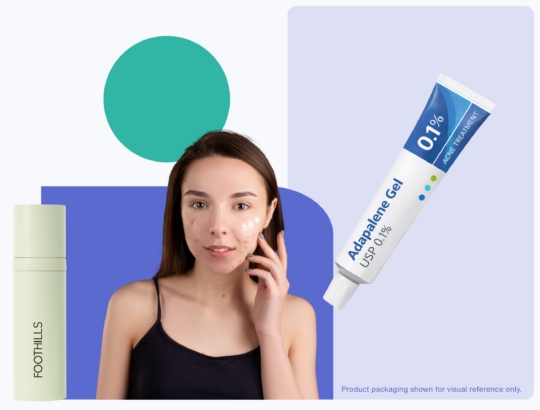
Via Miiskin you can select Foothills as your preferred pharmacy and most Foothills formulas are $48.99 for a 30-gram tube. Once your chosen dermatologist issues your prescription you can order it right on Miiskin and once the payment is processed they will prepare and ship your medication.
Important Disclaimer: Compounded medications are not reviewed by the FDA for safety or efficacy.
Adapalene side effects and precautions
Dr. Allen says that while adapalene is typically well-tolerated, especially compared to older retinoids, some side effects can occur, mostly in the first few weeks of use. These are usually mild and improve over time, but it’s important to use the medication as directed and support the skin with a gentle routine. Sun protection is essential, as adapalene can increase sun sensitivity. Patients with very sensitive skin or certain skin conditions like rosacea should use it cautiously and under medical guidance.
Common side effects of adapalene
- Dryness and peeling
- Redness or mild irritation
- Stinging or burning sensation
- Temporary worsening of acne (purging)3
Precautions when using adapalene
- Use sunscreen daily to prevent sunburn
- Avoid combining with harsh exfoliants or alcohol-based products
- Introduce gradually (every other night) to reduce irritation
- Not recommended during pregnancy
- Discontinue if you experience severe irritation or allergic reactions
How long does adapalene take to work?
Dr. Allen says that adapalene typically takes 8 to 12 weeks to show noticeable improvement in acne. Some people may see initial changes as early as 4 weeks, but it’s common for acne to temporarily worsen before it gets better (a phase known as purging). This happens as the medication speeds up cell turnover and brings clogged pores to the surface. Consistent, daily use is key, and results continue to improve with long-term use. It’s important to be patient and avoid stopping treatment too early, even if irritation or breakouts occur in the beginning.
Adapalene strengths
Dr. Allen explains that adapalene is available in several topical formulations, designed to suit different skin types and treatment needs. It comes in gel, cream, and lotion forms, with two main strengths: 0.1% and 0.3%.
Common adapalene strengths
- Adapalene 0.1% gel – OTC, ideal for mild to moderate acne
- Adapalene 0.3% gel – Prescription, for more stubborn acne
How to use adapalene?
Dr. Anne Allen, explains how to use adapalene step by step.
- Cleanse gently
Wash your face with a mild cleanser, then pat dry. - Wait 10–15 minutes
Let your skin fully dry to reduce irritation. - Apply a pea-sized amount
Dab onto forehead, cheeks, nose, and chin, then spread evenly over the face (not just on breakouts). - Use once daily at night
Adapalene works best when applied in the evening. - Moisturize after
Use a gentle moisturizer to reduce dryness or irritation. - Apply sunscreen every morning
Daily SPF 50 is essential to protect your skin.
Be consistent, results typically appear in 8–12 weeks. Mild irritation early on is normal and usually improves over time.
Adapalene shelf life and expiration date
Dr. Allen explains that adapalene typically has a shelf life of about 24 to 36 months from the date of manufacture, so you should always check the expiration date printed on the tube
Like most medications, it should only be used 6–12 months, after being opened, if stored properly, at room temperature, away from heat, moisture, and direct sunlight. However, if the product changes in color, consistency, or smell, or causes unexpected irritation, it’s best to stop using it, even if it hasn’t expired.
Comparing adapalene to other retinoids
According to Dr. Allen, retinoids play an important role in treating a wide range of skin concerns, including acne, clogged pores, uneven texture, and early signs of aging. Among them, adapalene is a well‑tolerated and effective option, commonly used for acne prevention and long‑term maintenance. While adapalene is just one of several available retinoids—each with different strengths and irritation potential—a general rule is to avoid using more than one retinoid at the same time. Because retinoids work through similar mechanisms, combining them does not improve results and can significantly increase the risk of irritation, dryness, and skin barrier disruption.
Adapalene vs Retinol
Dr. Allen says that adapalene is a prescription-strength or OTC medical retinoid with extensive clinical evidence for acne treatment, while retinol is a cosmetic ingredient that must be converted by the skin into active retinoic acid. This conversion makes retinol far less potent and slower to deliver visible results. Adapalene provides more consistent and predictable outcomes for acne with fewer steps of activation, yet remains gentler and more stable than many prescription retinoids, making it a stronger option for users who want real results beyond cosmetic skincare.
Adapalene vs Tretinoin
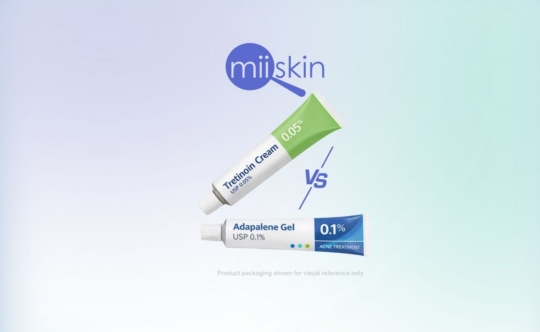
Adapalene is generally better tolerated than tretinoin, according to Dr. Allen, causing less irritation, redness, and peeling while still effectively treating acne, especially when used as part of combination therapy. Unlike tretinoin, adapalene is more photostable and less likely to increase sun sensitivity, making it more forgiving for users who are inconsistent with sunscreen. This makes adapalene particularly well suited for teenagers, first-time retinoid users, and people with sensitive skin, whereas tretinoin is often preferred for experienced users seeking stronger anti-aging benefits but who can tolerate more side effects.
Adapalene vs Tazarotene
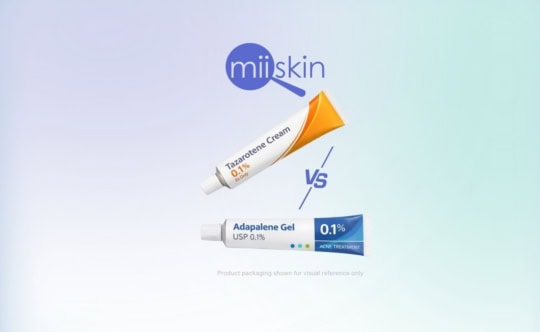
Dr. Allen says that adapalene is a milder, more tolerable retinoid compared to tazarotene, which is one of the most potent topical retinoids available. While tazarotene often delivers superior results for acne, hyperpigmentation, and skin texture, it also carries a higher risk of irritation and is contraindicated in pregnancy. Adapalene offers a safer and more approachable option for younger users, sensitive skin types, and long-term maintenance, whereas tazarotene is better suited for experienced retinoid users seeking maximum efficacy and who can tolerate stronger side effects.
Adapalene vs Trifarotene (Aklief)
According to Dr. Allen, adapalene is a third-generation retinoid known for its strong safety profile, affordability, and wide accessibility, including OTC availability at lower strengths. Trifarotene (Aklief), in contrast, is a fourth-generation retinoid specifically engineered to be highly selective for the RAR-γ receptor, which is the most prevalent retinoic acid receptor in the skin. This selectivity allows trifarotene to be effective for both facial and truncal acne while aiming to limit systemic exposure. However, Aklief is prescription-only, significantly more expensive, and primarily positioned for acne rather than anti-aging. Adapalene remains the more practical, cost-effective, and broadly applicable option for teenagers, first-time retinoid users, and long-term maintenance, while trifarotene is best reserved for patients with extensive acne who need a targeted, next-generation treatment and have access to prescription coverage.
Adapalene vs Isotretinoin
Adapalene is a topical retinoid used primarily for acne, while isotretinoin is an oral medication reserved for moderate to severe, treatment-resistant acne. Adapalene works locally on the skin with a significantly lower risk profile, whereas isotretinoin affects the entire body, is associated with serious potential side effects, and requires strict pregnancy prevention requirements and regular blood monitoring. For mild to moderate acne, adapalene offers an effective and far safer first-line option, while isotretinoin is typically considered only when topical and other systemic treatments have failed.
Combining adapalene with other medications
Acne is often managed using a combination of two or more treatments at once, a strategy known as combination therapy. This approach is designed to target multiple causes of acne—such as clogged pores, inflammation, excess oil, and acne-causing bacteria—all at the same time.
Dr. Allen explains that adapalene is frequently used in combination therapy because it helps normalize skin cell turnover and prevent clogged pores. When paired with other agents like benzoyl peroxide or clindamycin, it can significantly enhance results by addressing both pore blockages and bacterial overgrowth. This not only improves treatment outcomes but also reduces the risk of antibiotic resistance when antibiotics are part of the regimen. Combination therapy often leads to faster, more effective, and more sustained acne control than using a single medication alone.
Adapalene + benzoyl peroxide
Dr. Allen says that adapalene and benzoyl peroxide is one of the most effective combinations for treating both comedonal and inflammatory acne. Adapalene unclogs pores and reduces inflammation, while benzoyl peroxide kills acne-causing bacteria and lowers the risk of antibiotic resistance. Used together, they provide a powerful dual-action treatment. This combination is generally well-tolerated but may cause dryness or irritation, especially during the first few weeks of use.

Adapalene + benzoyl peroxide + clindamycin
Dr. Allen says that this triple combination is intended for moderate to severe acne. It merges a retinoid to clear pores, an antimicrobial agent to reduce bacteria, and an antibiotic to calm inflammation. While highly effective, it should be used under dermatologic guidance to limit the potential for antibiotic resistance. This regimen is typically reserved for more persistent or widespread acne.
Adapalene + clindamycin
According to Dr. Allen, this combination addresses both clogged pores and inflammation, making it useful for inflammatory acne when benzoyl peroxide isn’t tolerated. Adapalene helps with skin cell turnover, while clindamycin targets acne-causing bacteria. While effective, it’s less preferred long-term due to concerns about bacterial resistance when used without benzoyl peroxide.
Adapalene + azelaic acid
Dr. Allen says that these two ingredients are often used together in personalized treatment plans. Azelaic acid offers anti-inflammatory and pigment-fading benefits, complementing adapalene’s ability to unclog pores and normalize skin turnover. This combination is particularly useful for patients with acne, sensitive skin, or post-inflammatory hyperpigmentation.
Provider & Prescription Information
Miiskin connects patients with independent dermatologists who provide care through their private practices. Compounded prescriptions can be ordered via Miiskin and are dispensed by Foothills pharmacy. Generic prescriptions can be filled at any local or online pharmacy.
References:
1https://www.jaad.org/article/S0190-9622(15)02614-6/fulltext
2https://academic.oup.com/bjd/article-abstract/139/s52/3/6683761
3https://pubmed.ncbi.nlm.nih.gov/9833468/
 Want an adapalene prescription?
Consult a Dermatologist →