If you’re looking for an AI dermatologist, read this first
If you are looking for an AI dermatologist, we offer you an alternative so you can get adequate treatment fast, instead of just quick guesses.

Table of Content:
Can AI really diagnose you? | What AI is actually useful for | Where AI still falls short | AI dermatologist vs teledermatology | Why Miiskin is the next step | How Miiskin uses AI | When AI may be enough for a first step | Get real dermatology care | FAQ
If you’re searching for an AI dermatologist, you’re probably looking for fast answers about a rash, breakouts, hair or scalp concerns. That makes sense. AI skin tools can be quick, convenient, and helpful for spotting changes or deciding whether something may need more attention.
But there’s an important difference between getting a fast skin-related suggestion and getting medical care.
AI can support parts of dermatology, especially image capture, symptom tracking, pattern recognition, and early triage. What it cannot do on its own is replace a licensed dermatologist’s judgment, medical history-taking, diagnosis, prescribing, or follow-up care.
Recent dermatology research points in the same direction: AI is becoming more useful in clinical workflows, but the strongest model is still AI-supported care with real clinical oversight, not fully autonomous “AI dermatology”1 2 .
That’s where Miiskin fits in. Instead of stopping at a quick guess, Miiskin helps you take the next step: secure, image-based online consultations reviewed by board-certified dermatologists. If treatment is medically appropriate, they can diagnose, advise, prescribe, or refer you for further care.
Can an AI dermatologist really diagnose your skin condition?
Not in the same way a dermatologist can. Some AI skin tools can analyze images and compare them with large image datasets. That can make them useful for a first pass. They may help you understand that a flare-up is worth checking, or decide that a skin issue should not be ignored.
But many skin conditions look similar while needing very different treatments. Acne, rosacea, fungal rashes, contact dermatitis, perioral dermatitis, folliculitis, and eczema can overlap visually. A photo alone does not always tell the full story.
A dermatologist does more than look at a picture. They also consider:
- Your symptoms
- How long the problem has been present
- Whether it is getting worse
- Past treatments
- Irritation triggers
- Relevant medical history
- Whether prescription treatment or testing may be needed
That’s why AI can be useful as a first checkpoint, but not as a replacement for real dermatologic care.
If you’re weighing your options, see how 7 teledermatology platforms compare on speed, pricing, and whether you get to choose your own dermatologist.
What AI is actually useful for in dermatology
AI in dermatology is no longer just a novelty. A recent review in JEADV Clinical Practice describes AI as moving from innovation toward more routine clinical use across different dermatology workflows3.
Right now, AI can be especially useful for:
- Improving image capture and photo quality
- Helping patients document their treatment progress
- Supporting structured intake before review
- Flagging cases that may need attention sooner
- Generating more objective and reproducible data to support care4
That is an important point. The best use of AI is not to replace a dermatologist, it helps make skin care workflows more efficient, trackable, and accessible.
The same review highlights a wider shift in dermatology toward tools that support earlier detection, streamlined referrals, symptom monitoring, and more patient-centered longitudinal care5.
Where an AI dermatologist still falls short
Even when AI tools are impressive, they still have real limits.
AI cannot:
- Ask the right follow-up questions
- Interpret your symptoms in full clinical context
- Understand your treatment preferences and tolerance
- Prescribe medication
- Decide when a biopsy or in-person exam is needed
- Manage ongoing treatment adjustments
- Take responsibility for diagnostic uncertainty
A 2026 research paper notes broader barriers to large-scale AI adoption in dermatology, including regulatory and reimbursement challenges and limited data diversity6. That matters because tools trained on narrow or uneven datasets may not perform equally well across different skin tones, image quality levels, or clinical settings.
In other words, AI may help with the first layer of screening or workflow support, but it is still not the same thing as dermatologic care.
AI dermatologist vs teledermatology: what’s the difference?
An AI dermatologist app usually gives you automated feedback based on images and patterns.
Teledermatology connects you with a real clinician who reviews your history, images, and symptoms and can make medical decisions.
That difference matters if you need:
- A diagnosis you can act on
- Prescription treatment
- Follow-up advice
- A plan that changes if your skin gets worse
- Referral for in-person care
A 2023 research paper on skin-health startups helps explain why this model is becoming more important. The paper describes how digital dermatology companies, including Miiskin, are using telemedicine, AI, and imaging tools to improve access, self-assessment, and skin-health workflows7. The article also noted that estimates suggest roughly 40-50% of routine in-person dermatology visits may be replaceable by asynchronous image-based virtual visits when image quality is sufficient8.
That does not mean every skin problem should be handled remotely. It does mean that for many common, non-urgent cases, teledermatology can be a practical middle ground between “guessing with an app” and waiting weeks for an in-person visit.
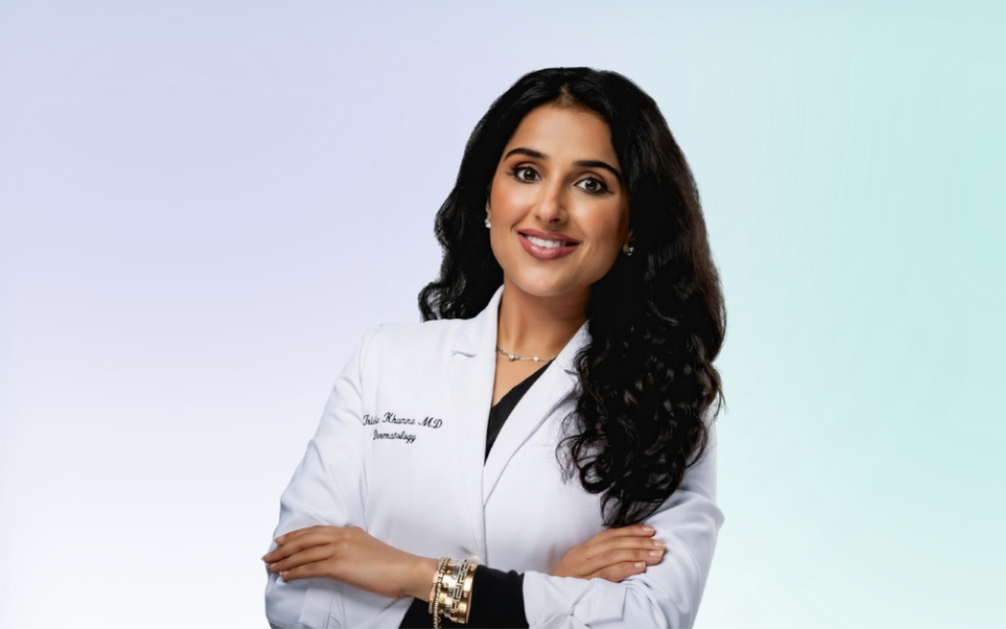
Dermatologists Accepting New Patient Appointments
AI dermatologist vs real dermatologist
| Feature | AI Dermatologist | Dermatologist via Miiskin |
| Instant feedback | ✅ | 24-48 hours |
| Medical diagnosis | ❌ | ✅ |
| Prescription treatment | ❌ | ✅ |
| Personalized care | ❌ | ✅ |
| Follow-up support | ❌ | ✅ |
Why Miiskin is a stronger next step than AI alone
Miiskin is a patient-initiated teledermatology platform designed to help people move from concern to clinical review more efficiently.
According to the 2026 JEADV Clinical Practice review, Miiskin is part of a “patient-initiated and dermatologist secured care model” that supports secure image-based dermatology consultations and helps expand access to specialist care9.
The same review describes several features that make this approach more clinically useful than a simple AI-only experience:
- Structured patient intake
- Disease-specific questionnaires
- Dermatologist review
- Image-quality guidance
- Secure image-based workflows
- Support for treatment decisions or referral when needed10 11
The review also reports that Miiskin has supported more than 10,000 consultations, with 91.6% of patients receiving evaluation, diagnosis, treatment decision, or referral within 24 hours and 96.5% within 48 hours12.
That is a much more useful model for someone who does not just want a skin-related guess, but wants to know what to do next.
How Miiskin uses technology to support telehealth workflows, not replace the dermatologist
This is an important distinction. Digital tools can make telehealth dermatology run better without replacing the clinician.
Miiskin uses machine learning to streamline the consultation workflow, helping dermatologists gather complete, well-organized information upfront so they can spend more time on patient care and treatment decisions.
That kind of technology matters because asynchronous dermatology depends on getting the right information to the dermatologist the first time. Better-organized submissions lead to faster, more accurate reviews.
The point isn't that AI becomes the dermatologist. It's that technology can help patients submit better information as part of the consultation, and better information supports a better dermatologist review.
AI-enabled tools are useful in this workflow because they generate objective, reproducible data that complements the dermatologist's clinical assessment.
When AI may be enough for a first step, and when it isn’t
AI may be enough for a first step when:
- You want a basic prompt to seek medical care
- You are trying to decide whether a skin issue seems worth a closer look
AI is not enough when:
- The problem has lasted more than a few weeks
- You are in pain, rapidly worsening, or very inflamed
- You may need prescription treatment
- The diagnosis is unclear as multiple conditions could look similar
- Your current skin care routine is making things worse
- You need ongoing treatment adjustment
For those situations, dermatologist-led care is the better next step.
When you may need in-person care instead of online care
Teledermatology is useful, but it is not right for every situation.
You may need in-person dermatology care if:
- You may need a biopsy or procedure
- Your symptoms are severe or rapidly progressing
- There is extensive blistering, bleeding, or infection
- The images are not enough for diagnostic confidence
- The dermatologist recommends an in-person follow-up
So, should you trust an AI dermatologist?
AI can be useful, but it should be put in the right role.
The best current way to think about AI in dermatology is this:
- AI can support awareness, monitoring, image quality, and workflow
- Teledermatology can support diagnosis, treatment planning, and follow-up
- In-person dermatology is still necessary for some higher-risk, procedural, or unclear cases
If you are worried about your skin, the goal should not only be speed. It should be getting the right next step.
Get real dermatology care, not just quick guesses
If you are using an AI skin tool because you want answers fast, Miiskin gives you a more useful next step.
Instead of stopping at automated feedback, you can submit your skin concern for review by an independent dermatologist, get guidance on what may be going on, and receive treatment or referral if medically appropriate.
That means:
- A real clinical review
- A diagnosis (when possible)
- Prescription access (if appropriate)
- Follow-up direction instead of guesswork
Your skin may deserve more than a quick pattern match. It deserves a real medical review.
Article references:
https://www.researchgate.net/publication/372986021_Skin_Digital-the_2022_startups
https://research.regionh.dk/da/publications/startups-driving-artificial-intelligence-into-clinical-dermatology/
Interested in learning more about prescription skincare companies?
Best online services for prescription skincare in 2026
Apostrophe vs Curology vs Miiskin
Need an alternative to Curology's tretinoin?
Best telehealth services to get Latisse
Need an alternative to Nurx tretinoin?
Miiskin and Foothills Pharmacy, a partnership that works

Need an emergency dermatologist?
Via Miiskin you can consult a same-day dermatologist and get an answer in 1-2 days. All from the comfort of your home.
 Struggling with a skin concern?
Consult a dermatologist →