
What can be mistaken for scabies?
Many skin conditions can look like scabies, but require completely different treatments. If you’re unsure what you’re dealing with, getting the right diagnosis early can make all the difference.

Table of Content:
Scabies | Hand foot and mouth disease | Impetigo | Herpes simplex | Bedbug bites | Chickenpox | Molluscum | Folliculitis | Eczema | Hives | Psoriasis | About scabies | Scabies medication | FAQ

Our commitment to producing high-quality content:
The information presented in this article is based on scientific research and the professional advice of our Content Medical Reviewers, who are experts in the field of Dermatology. How we write our content →
Scabies is often confused with other skin conditions such as eczema, dermatitis, or allergic reactions because they can cause similar symptoms like itching, redness, and rashes. However, these conditions are treated very differently and misdiagnosing them can delay the right care or make symptoms worse.
What are some rashes that look like scabies?
Dr. Howell explains that because many common skin conditions can often look very similar, it can be difficult to tell them apart on your own, and in most cases, a dermatologist is needed to make an accurate diagnosis.
The comparison table below highlights their similarities and differences, but if you’re unsure what you’re dealing with, an online dermatologist can assess your symptoms and provide a clear diagnosis from the comfort of your own home.
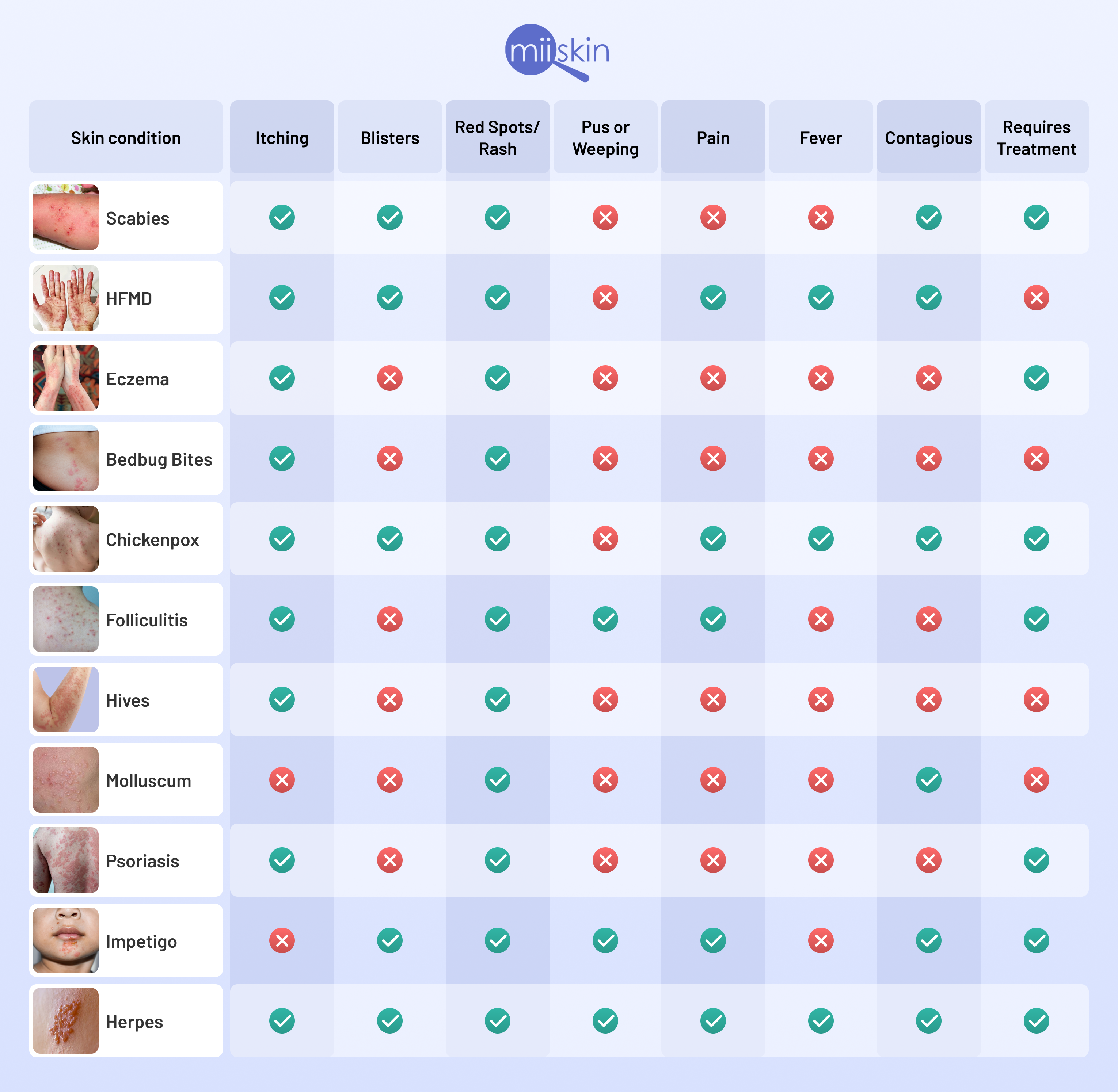
Scabies rash
Scabies is a highly contagious skin infection and can spread quickly through direct skin-to-skin contact in a family, child care group, school class or nursing home.
Due to their highly contagious nature, doctors often recommend treatment for the entire family or contact groups to eliminate the mite.
- Symptoms: The primary symptoms of scabies include intense itching and a pimple-like skin rash. The itching is often worse at night.
- Treatment: Topical creams such as permethrin, crotamiton, sulfur ointment, benzyl benzoate or ivermectin tablets2.
Hand foot and mouth disease (HFMD)
Hand, Foot, and Mouth Disease (HFMD) is a contagious viral infection commonly affecting children and characterized by sores in the mouth and a rash on the hands and feet. The infection is usually caused by a virus and spreads through direct contact with the virus from sneezing, coughing, or fecal contamination.
- Symptoms: Appearance of painful red blisters on the tongue, gums, inside of the cheeks, the palms, soles, and buttocks, fever, sore throat, and feeling unwell.
- Treatment: HFMD typically resolves on its own within 7 to 10 days, and treatments focus on relieving symptoms through hydration, rest, and over-the-counter pain relievers such as acetaminophen or ibuprofen3.
Impetigo
Impetigo is a highly contagious bacterial skin infection that is spread through direct skin to skin contact or by sharing personal items with a person that is infected. Impetigo most commonly affects young children, though it can occur at any age. It’s usually caused by either Staphylococcus aureus or Streptococcus pyogenes bacteria.
- Symptoms: Red sores that quickly rupture, ooze for a few days and then form a yellowish-brown crust.
- Treatment: Treatment typically involves antibiotic ointments or oral antibiotics to eliminate the bacteria4.
Herpes simplex
Herpes is a viral infection caused by two types of viruses: herpes simplex virus type 1 (HSV-1) and type 2 (HSV-2). HSV-1 primarily causes oral herpes, which is characterized by cold sores around the mouth and on the face. HSV-2 typically causes genital herpes, leading to sores and blisters in the genital area. Both types of herpes are highly contagious and can be transmitted through direct contact with an infected person’s skin or body fluids.
- Symptoms: Painful blisters or ulcers at the site of infection, fever, body aches.
- Treatment: Antiviral medications can help speed up healing and reduce the severity of episodes5.
Bedbug bites
The two main species of bedbugs that feed on human blood are Cimex lectularius and Cimex hemipterus. They usually bite at night and although their bites are not initially felt, they can turn into itchy welts. These insects reside in environments where people sleep or rest, such as beds, couches, and other furniture and although they are usually not passed through skin-to-skin contact, they can be transported via personal belongings, potentially leading to infestations in new areas.
- Symptoms: Small, red, itchy bumps/rash, typically in a line or grouped together.
- Treatment: Focus on relieving itching with antihistamines or corticosteroid creams and eradicating the bedbugs from home environments6.
Chickenpox (Varicella)
Varicella, commonly known as chickenpox, is a highly contagious viral infection caused by the varicella-zoster virus.The infection spreads through direct contact with the rash or through the air when an infected person coughs or sneezes. It primarily affects children and is characterized by an itchy, red rash that develops into fluid-filled blisters that eventually scab over. Other symptoms may include fever, tiredness, loss of appetite, and headache. Chickenpox is usually mild in children but can be more severe in adults.
- Symptoms: Blister-like rash, itching, tiredness, sore throat, headaches and fever
- Treatment: Chickenpox generally resolves on its own, but acyclovir can be prescribed to minimize symptoms. Treatments include rest, hydration, and medications like acetaminophen for fever and calamine lotion or antihistamines for itching7.
Skin Conditions: Types and Treatments
Molluscum contagiosum (water warts)
Molluscum contagiosum is a common viral infection of the skin caused by the molluscum contagiosum virus, a member of the poxvirus family and it spreads through direct skin-to-skin contact or by touching contaminated objects, such as towels or clothing. It primarily affects children but can also occur in adults, particularly those with weakened immune systems. The infection is characterized by small, painless, pearl-like bumps on the skin that may become itchy or sore. These bumps often have a dimple in the center and can appear anywhere on the body.
- Symptoms: Painless, firm, round bumps with a dimple in the center.
- Treatment: YCANTH (cantharidin) topical solution8, oral cimetidine9, podophyllotoxin, potassium hydroxide, salicylic acid, benzoyl peroxide, and tretinoin can be used as home treatments and must be applied to each lesion11.
Folliculitis
Folliculitis is a common skin condition characterized by inflammation of the hair follicles. This can occur anywhere on the skin where hair grows, including the scalp, face, and limbs. The inflammation is typically caused by a bacterial or fungal infection, and it can result in red, swollen bumps that may look like pimples, often with a hair in the center. These bumps can be itchy and sometimes painful. When the bumps rupture, they may release pus or blood. Frequent causes include irritation from shaving, tight clothing, or an existing skin condition.
- Symptoms: Red, swollen bumps that may have pus, itchy or burning skin.
- Treatment: Mild cases often resolve on their own, while more severe infections may need medications such as itraconazole, fluconazole, topical mupirocin, clindamycin, oral antibiotics, ivermectin or oral metronidazole12.
Eczema (Atopic Dermatitis)
Eczema is a chronic, inflammatory skin condition characterized by itchy, red, and dry skin, often leading to flaking or scaling. It is typically caused by genetic and environmental factors and can be exacerbated by irritants, allergens, and stress.
- Symptoms: Itchy, red patches on the skin, dryness, and possible oozing or crusting.
- Treatment: Managing eczema involves moisturizing regularly, avoiding known irritants, and using topical corticosteroids or calcineurin inhibitors to control symptoms. Severe cases may require systemic treatments13.
Hives (Urticaria)
Hives (also known as urticaria), is a skin reaction characterized by the sudden appearance of itchy, raised, red or skin-colored welts on the skin. These welts often come and go over a period, sometimes moving around the body. Hives are commonly triggered by allergies to medications, foods, insect stings, or other substances. Other causes can include infections, stress, and exposure to extreme temperatures. The condition may be acute, lasting less than six weeks, or chronic, persisting for longer periods.
- Symptoms: Red, itchy welts on the skin, which may merge to form larger swollen areas.
- Treatment: Treatment includes antihistamines to reduce itching and swelling. Severe cases may require corticosteroids14.
Psoriasis
Psoriasis is a chronic autoimmune condition that affects the skin, causing rapid skin cell turnover. This results in thick, red, scaly patches that can be itchy and sometimes painful. The exact cause of psoriasis is not fully understood, but it is thought to involve the immune system. Triggers for psoriasis outbreaks can include stress, infections, certain medications, and skin injuries.
- Symptoms: Red patches of skin covered with thick, silvery scales, dry skin that may crack and bleed.
- Treatment: Treatments include topical treatments, phototherapy, and systemic medications to reduce cell turnover and inflammation15.
Learn more about scabies
What do scabies look like?
Scabies typically appear as a skin rash composed of small red bumps and blisters. Scabies is also characterized by the presence of burrow tracks: tiny, irregular, raised lines on the skin where the mites have tunneled. These tiny lines may be very difficult to see due to scratching or inflammation. The intense itching associated with scabies is often worse at night and can be very uncomfortable.
Scabies rashes can affect various parts of the body, such as:
- Between the fingers
- Wrist areas
- Elbows
- Armpits
- Waistline
- Buttocks
- Male genital area
- Umbilicus (belly button)
- Soles of the feet in infants16 17
Scabies symptoms
The symptoms of scabies may take 4-6 weeks to appear in individuals who have never been infested before, as this is the body’s reaction time to the mites. However, in people who have had scabies previously, symptoms may appear much sooner, typically within a few days of re-exposure.
- Intense itching: The hallmark symptom of scabies is severe itching, which tends to get worse at night. The itching is caused by an allergic reaction to the presence of the mites.
- Rash: Scabies typically leads to a rash that consists of tiny bumps that can look like pimples or knots under the skin. The rash commonly appears in the webs between the fingers, on the wrists, elbows, armpits, waist, buttocks, genital area, and the backs of the knees.
- Burrows: One of the distinguishing features of scabies is the appearance of burrows. These are tiny, irregular tracks made up of tiny blisters or bumps on the skin. Burrows are most commonly found on the hands, feet, wrists, and between the fingers and toes.
- Infection: Due to scratching, the affected areas may become secondary infected with bacteria, leading to complications like impetigo.
- Crusts: In severe cases, such as with Norwegian scabies (crusted scabies), thick crusts and scales may form on the skin that contain thousands of mites and eggs18.
What should I do if I suspect I have scabies?
If you suspect that you have scabies, it is important to take the following steps to manage the condition and prevent its spread.
- Consult an online dermatologist immediately for diagnosis and treatment.
- Start treatment promptly and treat all close contacts simultaneously, regardless of symptoms.
- Wash all recently used clothing, bedding, and towels in hot water and dry on high heat. Seal non-washable items in a plastic bag for at least 72 hours to kill any mites.
- Avoid direct skin contact with others until treatment is effective, typically 24 hours after application.
- Monitor your symptoms post-treatment; itching may persist for a few weeks due to an allergic reaction, but new burrows or rashes may require re-treatment.
- Schedule a follow-up with your dermatologist if symptoms persist or new ones appear to ensure complete eradication of the mites.
Skin Health: Conditions & Treatments
Scabies treatment
Dr. Howell says there are several medications available for treating scabies depending on the severity of the infestation, the patient’s medical history, and other factors. In some cases, doctors may recommend using both oral and topical treatments to increase efficacy, particularly in the case of severe or crusted scabies (also called Norwegian scabies). This approach can help ensure that the treatment penetrates thick crusts and reaches all mites.
Topical creams for scabies
- Permethrin cream (5%): This is the most commonly prescribed medication for scabies in children and adults. It’s applied over the entire body from the neck down and left on for about 8-14 hours before being washed off. It’s safe for adults, children, and the elderly but is usually not recommended for infants under two months of age19.
- Spinosad liquid (0.9%): this is a newer treatment (typically used to treat head lice) approved to treat scabies in children as young as 4 years of age20.
- Crotamiton cream or lotion (10%): Crotamiton is another topical agent used to treat scabies, known for its anti-pruritic (anti-itching) properties. It is applied once daily for two consecutive days21.
- Sulfur ointment (5-10%): This is one of the oldest scabies treatments and is particularly used for infants, pregnant women, and nursing mothers. It’s less commonly used today but can be effective, especially in resistant cases. It is applied nightly for three to six nights22.
- Benzyl benzoate (25%): Applied to the body, avoiding the face, benzyl benzoate is left on the skin for 24 hours before being washed off. It may be reapplied for a second 24-hour period if necessary23.
- Lindane lotion (1%): Due to potential neurotoxicity, lindane is usually reserved for patients who cannot tolerate other treatments or when treatment with other agents has failed. Lindane is applied once and washed off after eight hours. It is not recommended for pregnant women, the elderly, or children24.
Oral medications for scabies
- Ivermectin: This is an oral medication that can be used in cases where topical treatment is impractical (such as with mentally or physically disabled patients) or when infestation is crusted and severe. It’s typically given as a single dose and may be repeated in one to two weeks if necessary. Ivermectin is not approved for use in children weighing less than 15 kg or in pregnant women.
How do you say scabies in Spanish?
Scabies is called "sarna" in Spanish and mites are called “acaros” in Spanish.
Lee este artículo en Español. Ronchas en la piel causadas por ácaros.
Article References:
https://my.clevelandclinic.org/health/diseases/4567-scabies
https://www.ncbi.nlm.nih.gov/books/NBK544306/
https://www.ncbi.nlm.nih.gov/books/NBK431082/
https://www.ncbi.nlm.nih.gov/books/NBK430974/
https://my.clevelandclinic.org/health/diseases/22855-herpes-simplex
https://www.ncbi.nlm.nih.gov/books/NBK538128/
https://www.ncbi.nlm.nih.gov/books/NBK448191/
https://ycanth.com/
https://www.jwatch.org/jd199610010000005/1996/10/01/cimetidine-molluscum-contagiosum
https://dermnetnz.org/topics/podophyllotoxin
https://www.ncbi.nlm.nih.gov/books/NBK441898/
https://www.ncbi.nlm.nih.gov/books/NBK448194/
https://my.clevelandclinic.org/health/diseases/4567-scabies
https://www.mayoclinic.org/diseases-conditions/scabies/symptoms-causes/syc-20377378
https://my.clevelandclinic.org/health/drugs/19057-permethrin-skin-cream
https://www.aad.org/public/diseases/a-z/scabies-treatment
https://my.clevelandclinic.org/health/drugs/18703-crotamiton-topical-cream-or-lotion
https://www.mayoclinic.org/drugs-supplements/benzyl-benzoate-topical-route/proper-use/drg-20062209
https://www.mayoclinic.org/drugs-supplements/lindane-topical-route/proper-use/drg-20064552
https://www.ncbi.nlm.nih.gov/pmc/articles/PMC5193200/
Skin conditions and treatments
Articles reviewed by dermatologists
Facial treatment for seborrheic dermatitis
How to get rid of rosacea permanently?
How to calm a rosacea flare-up fast?
Spongiotic dermatitis: What is it and what is the best treatment?
A dermatologist’s guide to psoriasis medication
Skin Issues: Types & Solutions




 Not sure what your skin condition is?